Pharm'Up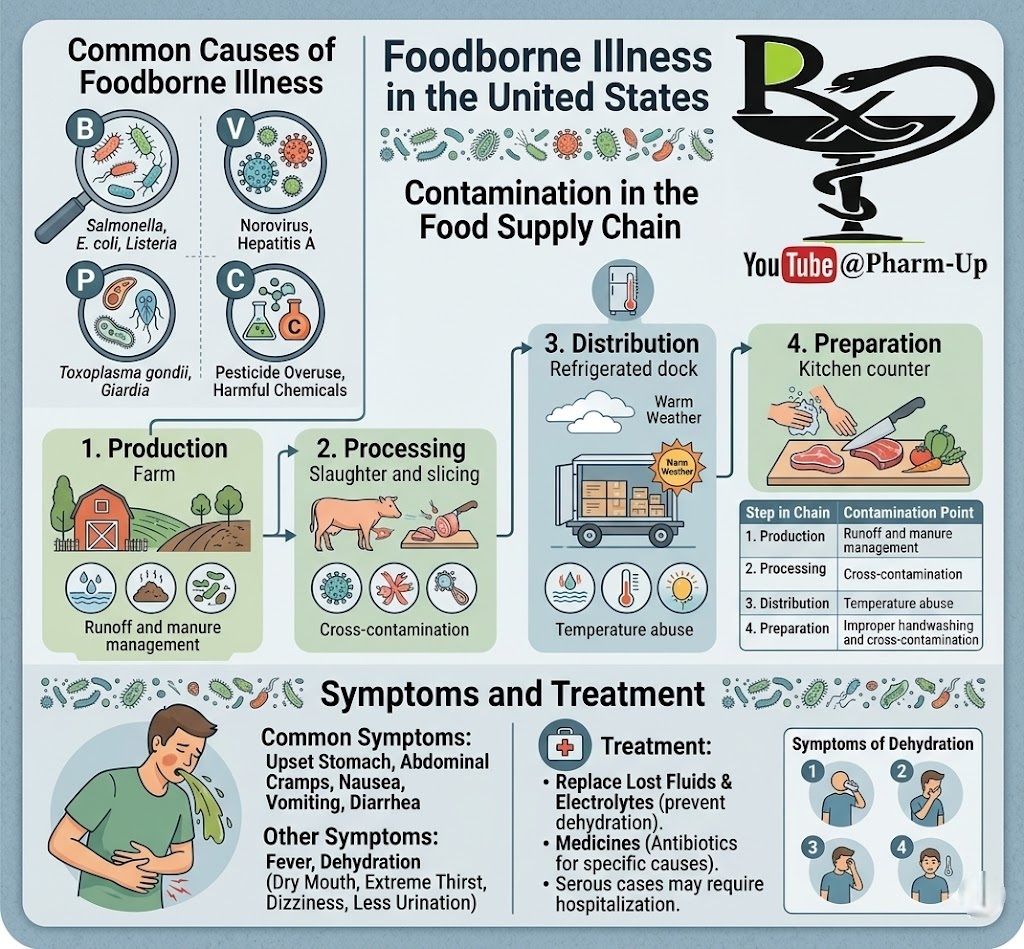
Every year, an estimated 48 million people in the United States experience foodborne illness. While this statistic might seem alarming, understanding the causes, symptoms, and prevention strategies can significantly reduce your risk of becoming one of those numbers.
What Causes Foodborne Illness?
The primary culprits behind foodborne illnesses are microorganisms, specifically:
- Bacteria: Bacteria like Salmonella, E. coli, Listeria, and Campylobacter are common causes of food poisoning. They can contaminate a wide range of foods, including poultry, ground beef, eggs, and raw produce.
- Viruses: Viruses such as norovirus and hepatitis A are highly contagious and can be transmitted through contaminated food and water, as well as person-to-person contact.
- Parasites: Although less common in the U.S. than bacterial or viral causes, parasites like Toxoplasma gondii, Giardia, and Cryptosporidium can contaminate food or water sources.
- Harmful Chemicals: Although rare, high amounts of pesticides or other chemical contaminants on produce or in water can cause foodborne illness.
[Image illustrating bacteria, virus, parasite, and chemical contaminants under a microscope]
Understanding the Food Supply Chain and Contamination Points
Contamination can occur at any stage of the food journey, from the initial “farm” or “fishery” to the final “table.”
| Step in the Supply Chain | Potential Contamination Point |
| Production (Farm/Fishery) | Runoff from animal pastures, use of contaminated irrigation water, and improper manure management on farms. For fish, exposure to chemical pollutants or parasites in their habitat. |
| Processing | Cross-contamination during the slaughter of animals for meat. Contamination of fruits and vegetables during washing, peeling, cutting, or packaging if equipment is not properly sanitized. |
| Distribution and Storage | Leaving refrigerated foods on loading docks in warm weather. Temperature abuse during transport or storage can create an environment where bacteria multiply rapidly. |
| Preparation (Kitchen) | Improper handwashing before food handling. Leaving perishable food at room temperature for more than two hours. Using the same cutting board for raw meat and produce (cross-contamination). |
Recognizing the Symptoms and Treatment
Most foodborne illnesses are acute, meaning they appear suddenly and resolve relatively quickly. The severity can range from mild discomfort to serious health complications requiring hospitalization.
| Category | Typical Symptoms |
| Common Symptoms | Upset stomach, nausea, abdominal cramps, vomiting, and diarrhea. |
| Other Symptoms | Fever, dehydration (characterized by dry mouth, extreme thirst, little or no urination, and dizziness). |
Treatment:
Most people recover on their own within a few days. The most critical aspect of treatment is replacing lost fluids and electrolytes to prevent dehydration. In some cases, healthcare providers can diagnose the specific cause and may prescribe medications like antibiotics. Serious cases might necessitate hospitalization for intensive care and intravenous fluid therapy.
About the Author