Pharm'Up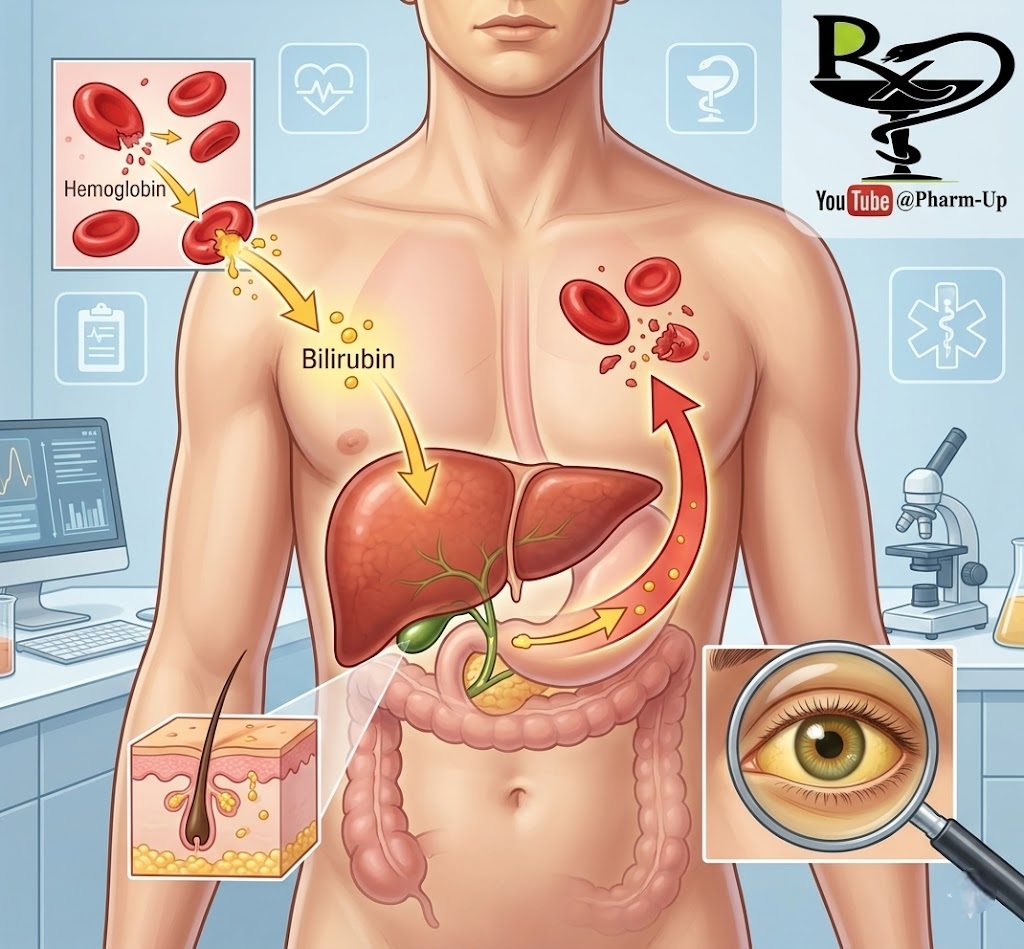
Jaundice is a condition characterized by the yellowing of the skin and the whites of the eyes. This change in pigmentation occurs when there is a surplus of bilirubin—a yellow-orange pigment—circulating in the bloodstream and depositing into the tissues.
The Science of Bilirubin
Bilirubin is a natural byproduct of the body’s recycling system.
- Red Blood Cells: Your body constantly produces new red blood cells to replace old ones.
- Hemoglobin Breakdown: When old cells break down, they release hemoglobin. The yellow chemical within that hemoglobin is bilirubin.
- The Liver’s Role: Under normal conditions, the liver filters bilirubin from the blood, processes it, and ensures it is excreted from the body.
- The Buildup: If the liver is unable to process these cells efficiently, or if there is an obstruction, bilirubin levels rise, leading to the characteristic yellow appearance.
Jaundice Across Different Life Stages
While the symptoms may look the same, the underlying causes of jaundice can vary significantly depending on age:
In Newborns
Many healthy infants experience jaundice during their first week. This is often because a newborn’s liver is still developing and cannot yet keep up with the rate of bilirubin production. In most cases, this resolves naturally as the liver matures.
In Adults
In older children and adults, jaundice is usually an indicator of an underlying medical condition. Common causes include:
- Liver Disease: Chronic conditions like hepatitis or cirrhosis.
- Blockages: Gallstones or tumors that obstruct the bile ducts.
- Infections & Blood Disorders: Certain infections or genetic blood diseases that accelerate the breakdown of red blood cells.
- Medications: Certain drugs can cause liver stress or interfere with bilirubin processing.
Diagnosis and Significance
Because jaundice is a visible symptom rather than a disease itself, healthcare providers use it as a “red flag” to investigate deeper issues. Diagnosis typically involves blood tests to check liver function and bilirubin levels, as well as imaging to check for physical blockages.
About the Author