Pharm'Up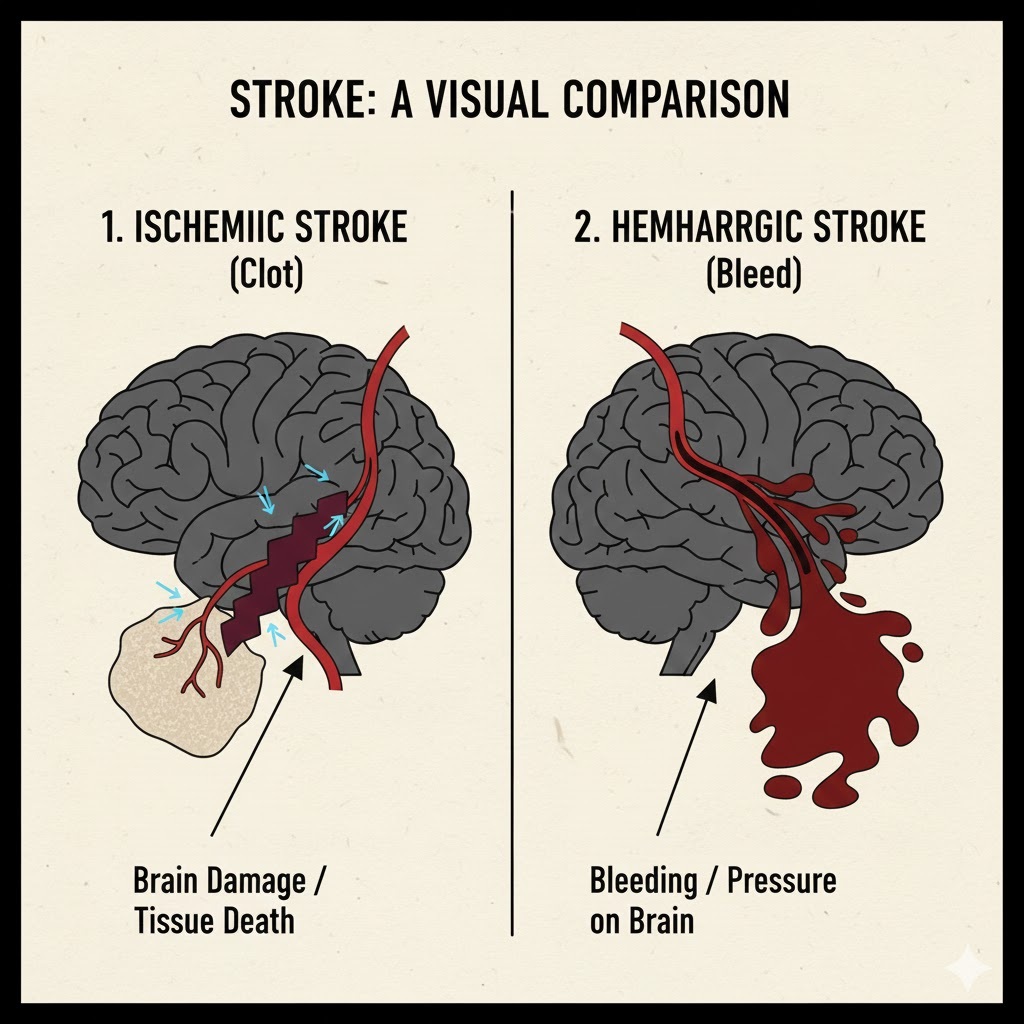
A stroke occurs when the blood supply to part of the brain is interrupted or reduced, preventing brain tissue from getting oxygen and nutrients. Within minutes, brain cells begin to die. Because “time is brain,” immediate medical intervention is vital to prevent permanent disability or death.
Types of Stroke and TIA
Understanding the type of stroke is crucial because the treatments for each are very different.
- Ischemic Stroke (80% of cases): Occurs when a blood vessel supplying the brain becomes blocked by a blood clot.
- Hemorrhagic Stroke: Occurs when a weakened blood vessel ruptures and bleeds into the surrounding brain tissue.
- Transient Ischemic Attack (TIA): Often called a “mini-stroke,” this is a temporary blockage. While it doesn’t cause permanent damage, it is a major warning sign that a full stroke may happen soon.
Recognizing the Signs: Act F.A.S.T.
Use the F.A.S.T. acronym to quickly identify a stroke:
| Letter | Sign | What to observe |
| F | Face | Ask the person to smile. Does one side of the face droop? |
| A | Arms | Ask them to raise both arms. Does one arm drift downward? |
| S | Speech | Ask them to repeat a simple phrase. Is their speech slurred or strange? |
| T | Time | If you see any of these signs, call 911 immediately. |
Risk Factors and Demographics
Certain populations are at a statistically higher risk for stroke due to a combination of genetic factors, prevalence of underlying conditions, and environmental factors.
Racial and Ethnic Disparities
- African Americans: Have nearly twice the risk of a first-time stroke compared to white individuals and have a higher death rate from stroke.
- Hispanics: Have seen a rise in stroke rates since 2013 and tend to suffer strokes at younger ages than non-Hispanic whites.
- Prevalence: Approximately 3.8% of African American adults and 2.5% of Hispanic adults have had a stroke, compared to 2.4% of white adults.
Medical Risk Factors
- High Blood Pressure: The #1 cause of stroke.
- Diabetes: Increases the risk of blood vessel damage.
- Atrial Fibrillation (AFib): Increases the risk of stroke by 5 times because it allows blood to pool in the heart and form clots.
Diagnosis and Treatment
Doctors use CT scans or MRIs to determine the type of stroke immediately upon arrival at the hospital.
Treating Ischemic Stroke
- tPA (Clot Buster): A gold-standard medication that dissolves clots. It must be administered within 4.5 hours of the start of symptoms.
- Thrombectomy: A procedure where a surgeon physically removes the clot using a catheter.
Treating Hemorrhagic Stroke
- Blood Pressure Control: Reducing pressure to stop active bleeding.
- Surgery: Clipping an aneurysm or repairing an Arteriovenous Malformation (AVM)—a tangle of faulty vessels.
Prevention and Recovery
80% of strokes are preventable through lifestyle changes:
- Manage Hypertension: Keep blood pressure below 120/80.
- Healthy Diet: Reduce salt and saturated fats.
- Physical Activity: Aim for 150 minutes of moderate exercise per week.
- Smoking Cessation: Smoking doubles your risk of ischemic stroke.
About the Author




 Pharm'Up