Pharm'Up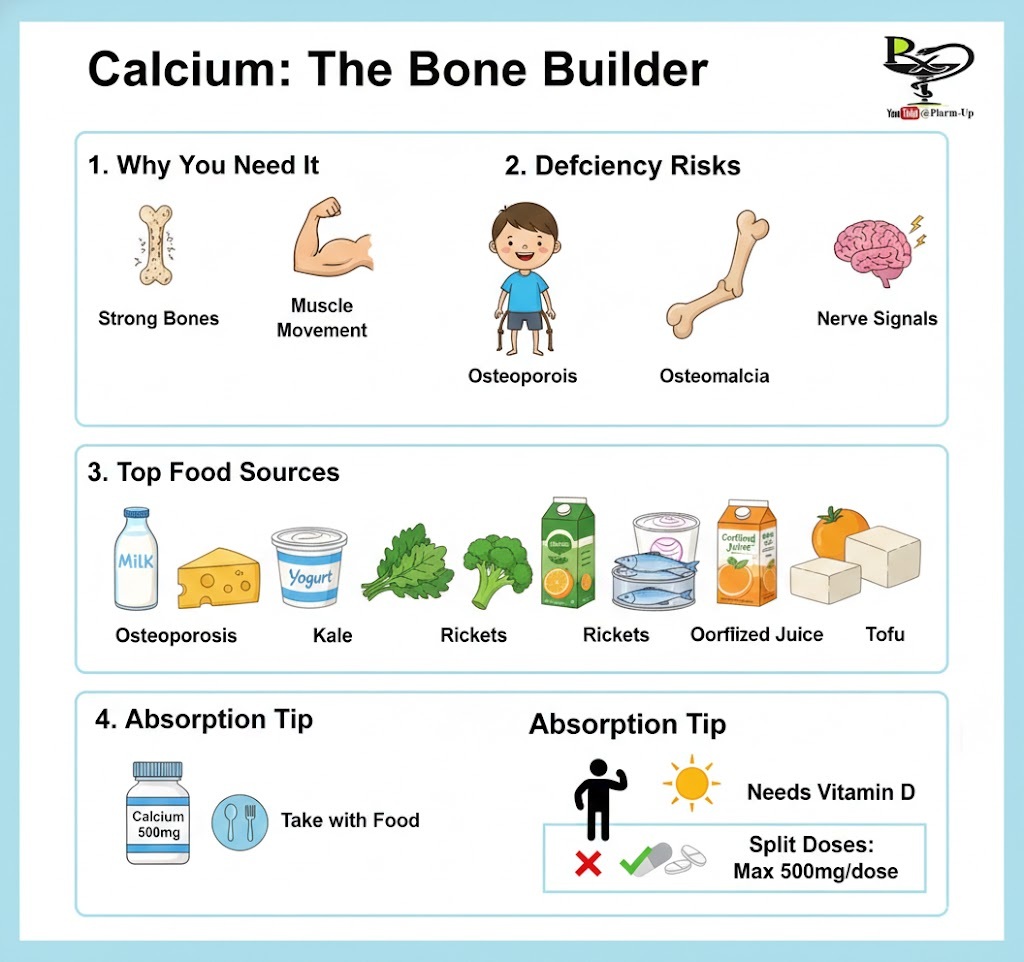
Calcium is the most abundant mineral in the human body. While we often associate it strictly with bone health, it is actually a vital signaling molecule that allows the brain, heart, and muscles to communicate. Because the body cannot produce calcium on its own, it must be ingested through diet or supplements; otherwise, the body “borrows” it from the bones, leading to weakness over time.
1. Why Your Body Needs Calcium
Calcium serves several critical physiological functions:
- Structural Integrity: Roughly 99% of your calcium is stored in the bones and teeth, providing the rigid framework for your body.
- Muscle Contraction: Calcium ions allow muscle fibers to slide past each other, enabling movement and keeping your heart beating.
- Neural Communication: It acts as a messenger, helping nerves transmit electrical impulses from the brain to every limb.
- Hormonal Regulation: It aids in the secretion of enzymes and hormones that manage digestion and metabolism.
2. Risks of Calcium Deficiency
A long-term lack of calcium can lead to “silent” diseases that aren’t noticed until a bone breaks:
- Osteoporosis: A thinning of bone mass, particularly common in postmenopausal women.
- Rickets & Osteomalacia: Conditions that cause the “softening” of bones, leading to bowing or fractures in both children and adults.
- Hypocalcemia: Low blood calcium levels, which can cause muscle cramps, numbness, and abnormal heart rhythms.
3. Recommended Daily Intake (mg)
| Age Group | Daily Amount |
| Infants (7–12 months) | 260 mg |
| Children (1–8 years) | 700 – 1,000 mg |
| Teens (9–18 years) | 1,300 mg (Peak bone-building years) |
| Adults (19–50 years) | 1,000 mg |
| Women 51+ / Men 71+ | 1,200 mg |
4. Best Sources of Calcium
To meet your daily requirements, a “food-first” approach is recommended:
- Dairy: Yogurt, milk, and hard cheeses (the most bioavailable sources).
- Plant-Based: Kale, broccoli, bok choy, and calcium-set tofu.
- Fortified Foods: Orange juice, soy milk, and breakfast cereals.
- Supplements: * Calcium Carbonate: Requires stomach acid (take with food).
- Calcium Citrate: Absorbed easily at any time (ideal for those on antacids or with low stomach acid).
Pro-Tip: Your body can only absorb about 500 mg of calcium at a time. If you need 1,000 mg daily, split it into two doses for maximum efficiency.
5. The “Vitamin D” Connection
Calcium cannot do its job alone. Your body requires Vitamin D to absorb calcium from the intestines. Without enough Vitamin D, you could be eating plenty of calcium, but your body won’t be able to use it.
About the Author