Pharm'Up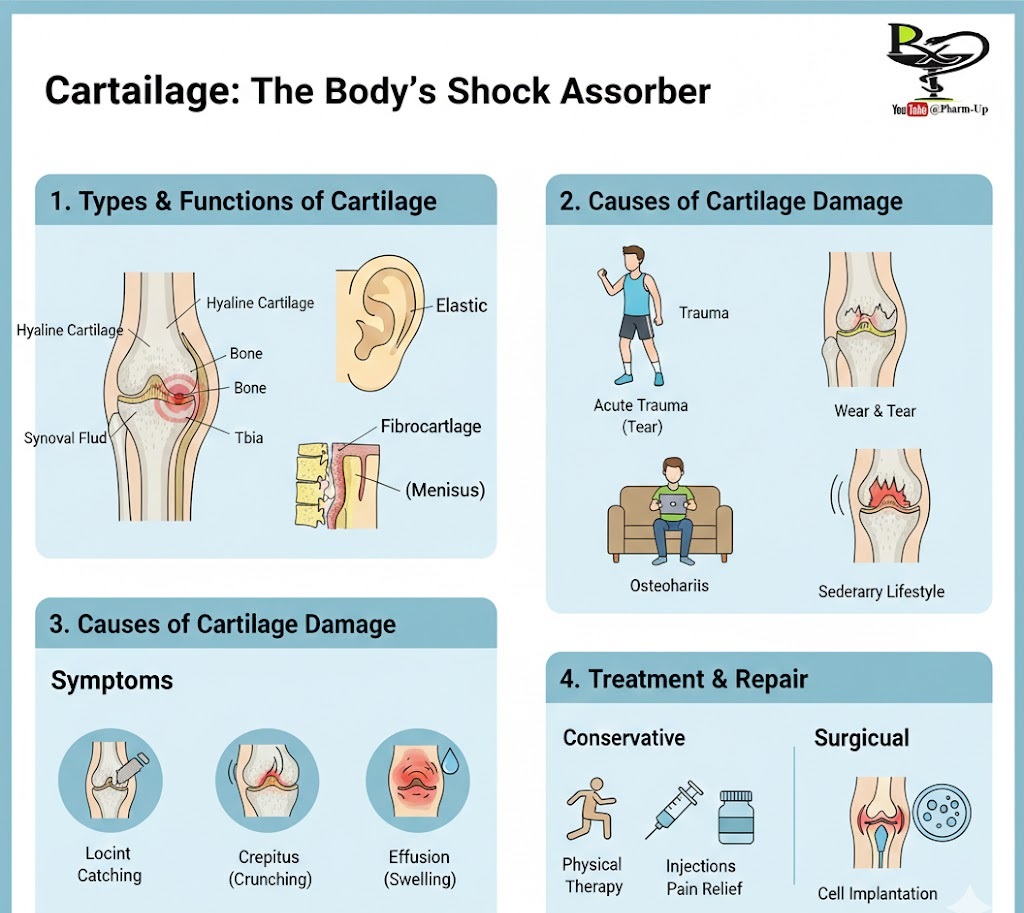
Cartilage is a specialized, fibrous connective tissue that is both tough and flexible. Unlike other tissues, cartilage does not contain blood vessels or nerves (it is “avascular”), which means it receives nutrients through diffusion from surrounding fluids. This unique structure allows it to withstand intense pressure, but it also means that once damaged, cartilage heals very slowly.
1. Types and Functions of Cartilage
Not all cartilage in your body is the same. It is generally categorized into three types based on its composition and location:
- Hyaline Cartilage: The most common type. It covers the ends of bones in joints (articular cartilage), allowing them to glide with minimal friction. It also forms the structure of the nose and windpipe.
- Elastic Cartilage: Contains more elastic fibers, making it much more flexible. This is what gives your external ears their shape.
- Fibrocartilage: The toughest type, designed to act as a heavy-duty shock absorber. It is found in the intervertebral discs of the spine and the meniscus in the knee.
2. Common Causes of Cartilage Damage
Because cartilage acts as a protective “cap” for bones, its degradation leads to direct bone-on-bone contact.
- Acute Trauma: High-impact sports injuries or falls can cause “tears.” A common example is a meniscus tear in the knee.
- Wear and Tear (Osteoarthritis): Over time, the smooth hyaline cartilage can thin and become “frayed,” leading to the chronic inflammation known as osteoarthritis.
- Lack of Movement: Since cartilage has no blood supply, it relies on the “pumping” action of joint movement to circulate nutrients. A sedentary lifestyle can actually weaken cartilage.
- Inflammatory Disorders: Conditions like rheumatoid arthritis can cause the body’s immune system to attack the joint lining and cartilage.
3. Symptoms of Cartilage Problems
If your cartilage is thinning or torn, you may experience:
- Joint Locking: A piece of “loose” cartilage may get caught in the joint, preventing it from moving.
- Grinding Sensations: Feeling or hearing a “pop” or “crunch” (crepitus) during movement.
- Persistent Swelling: Often called “water on the knee” or joint effusion.
- Stiffness: Especially after periods of inactivity.
4. Treatment and Repair
Because cartilage doesn’t heal well on its own, medical intervention is often necessary:
- Conservative: Physical therapy to strengthen the muscles around the joint, taking the load off the cartilage.
- Injections: Hyaluronic acid injections to “lubricate” the joint.
- Surgical Repair: * Microfracture: Surgeons create tiny holes in the bone to stimulate the growth of new, “filler” cartilage.
- Autologous Chondrocyte Implantation (ACI): Growing a patient’s own cartilage cells in a lab and re-planting them into the injury site.
5. Prevention: Protecting Your Joints
- Maintain a Healthy Weight: Every pound of body weight puts 4 pounds of pressure on your knee joints.
- Stay Active: Low-impact exercises like swimming and cycling keep cartilage nourished without the “pounding” of running.
- Proper Form: Use correct mechanics during lifting or sports to avoid uneven pressure on joint surfaces.
About the Author