Pharm'Up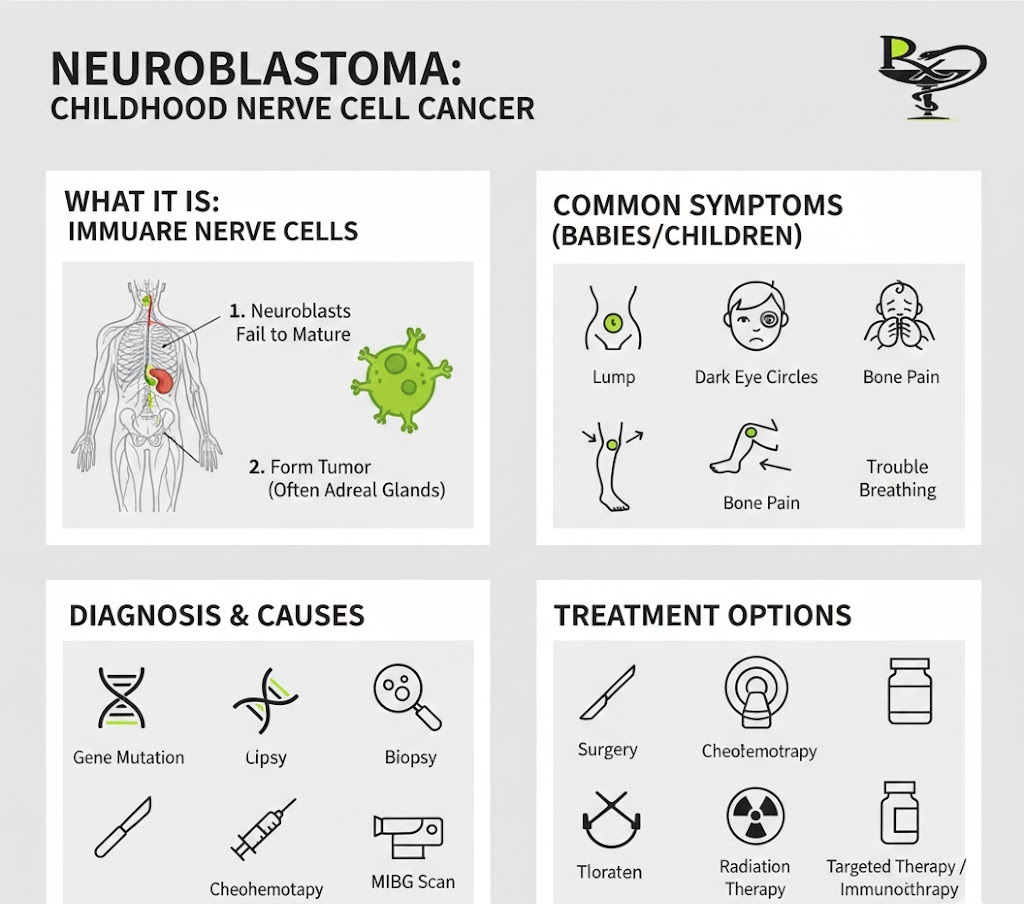
Neuroblastoma is a rare type of cancer that develops from neuroblasts—immature nerve cells that fail to develop into functioning neurons. Instead of maturing, these cells grow uncontrollably to form a solid tumor. It is primarily a childhood cancer, often diagnosed in infants and very young children.
Where It Starts
Neuroblastoma most commonly originates in the adrenal glands, located on top of the kidneys. However, because neuroblasts are part of the sympathetic nervous system, tumors can also develop anywhere along the nerve chains in the:
- Abdomen (stomach area)
- Chest
- Neck
- Spine
Symptoms and Signs
Symptoms vary depending on the tumor’s size and location. Because it often starts in the abdomen, a swollen stomach or a firm, painless lump is a frequent early sign.
- Abdominal/Chest: A lump, swelling, or trouble breathing (if the tumor presses on the lungs).
- Eyes: Bulging eyes or dark circles (often called “raccoon eyes”) if the cancer spreads behind the eyes.
- Bones: Bone pain or limping if the cancer has metastasized to the skeletal system.
- Skin: In infants, small, painless, bluish lumps under the skin.
- Neurological: Weakness or paralysis if a tumor presses on the spinal cord.
Diagnosis
Physicians use a combination of specialized imaging and laboratory tests to confirm the diagnosis:
- MIBG Scan: A highly specific test where a radioactive substance is injected to “light up” neuroblastoma cells on a scanner.
- Urine and Blood Tests: To check for high levels of catecholamines (hormones produced by neuroblastoma cells).
- Biopsy: Removing a small tissue sample to examine the genetic makeup of the tumor.
- Bone Marrow Aspiration: Checking if the cancer has spread to the bone marrow.
Treatment Options
Treatment is tailored to the “risk group” (Low, Intermediate, or High) based on the child’s age and the tumor’s genetics.
- Surgery: To remove the primary tumor if it hasn’t spread.
- Chemotherapy & Radiation: Standard treatments to kill rapidly dividing cancer cells.
- Stem Cell Rescue: High-dose chemo followed by a transplant of the child’s own healthy stem cells to help the body recover.
- Targeted Therapy: Using drugs like monoclonal antibodies to attack specific markers on cancer cells while sparing healthy tissue.
- Iodine 131-MIBG Therapy: Delivering targeted radiation directly to the tumor cells via an injection.
About the Author