Pharm'Up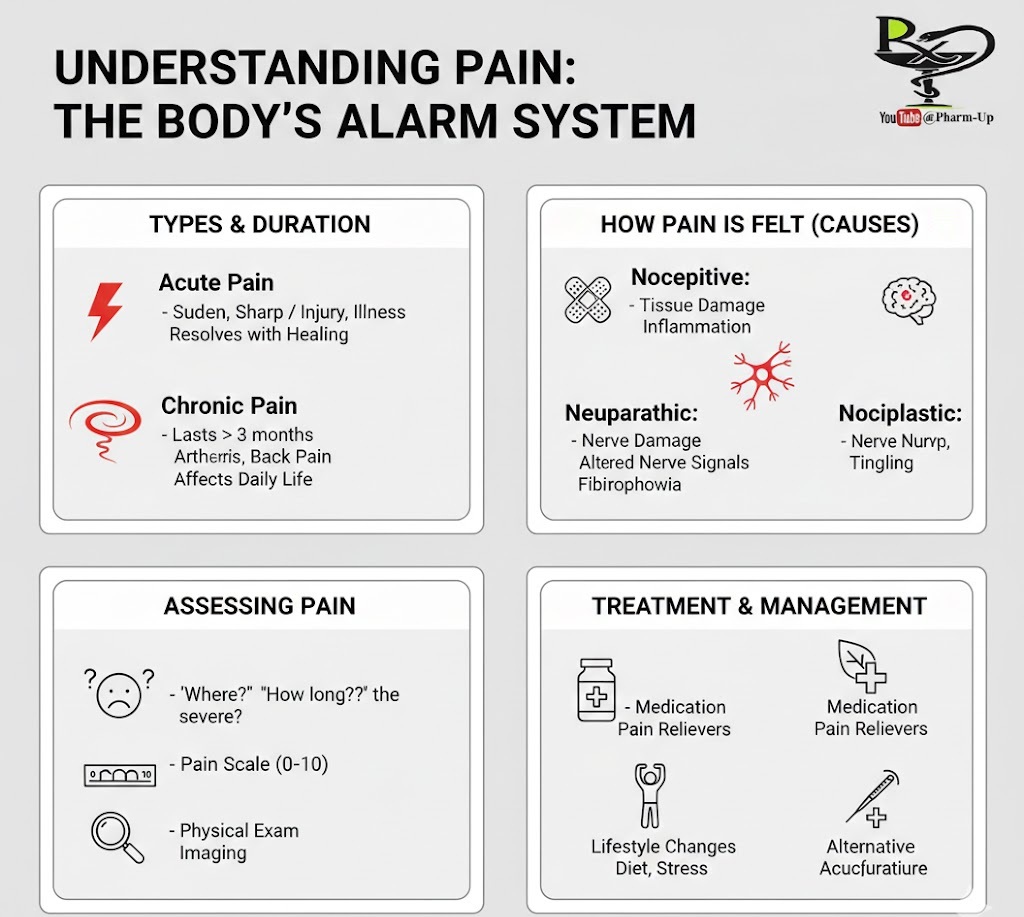
Pain is an essential, albeit unpleasant, signal from your nervous system. It acts as a warning sign that something in the body requires attention. Because pain is a subjective experience, two people with the same injury may perceive the intensity and sensation of the pain quite differently.
Types of Pain
Pain is generally classified by its duration and the underlying mechanism causing the sensation:
- Acute Pain: Starts suddenly and is usually sharp. It serves as a direct warning of injury (like a broken bone) or inflammation. It typically resolves once the underlying cause is healed.
- Chronic Pain: Persistent pain that lasts for more than three months. It often outlasts the initial injury and can become a condition in itself, affecting mood, sleep, and daily activity.
- Episodic Pain: Pain that comes and goes, often associated with long-term conditions like migraines or sickle cell crises.
Categorization by Cause:
- Nociceptive: Resulting from physical tissue damage or inflammation (e.g., a burn or a sprain).
- Neuropathic: Caused by actual damage to the nerves themselves, often described as “shooting” or “burning.”
- Nociplastic: Pain that arises from altered function of pain-related sensory pathways, even when no clear tissue damage is present (e.g., fibromyalgia).
Diagnosis: How Pain is Measured
Since pain cannot be seen on an X-ray or measured with a blood test, healthcare providers rely heavily on your description. Common tools include:
- Pain Scales: Rating pain from 0 (no pain) to 10 (worst possible pain).
- Quality Descriptions: Identifying if the pain is dull, sharp, throbbing, or stinging.
- Pattern Mapping: Identifying when the pain occurs (morning vs. night) and what triggers or relieves it.
Treatment and Management
While not all pain can be “cured,” most pain can be managed through a combination of approaches tailored to the specific type of pain.
| Treatment Category | Examples |
| Pharmacological | Over-the-counter pain relievers, anti-inflammatories, or specialized nerve medications. |
| Physical Therapy | Strengthening exercises, stretching, and improving range of motion. |
| Alternative | Acupuncture, massage, and chiropractic care. |
| Lifestyle | Stress management, healthy diet, and maintaining a regular sleep schedule. |
About the Author