Pharm'Up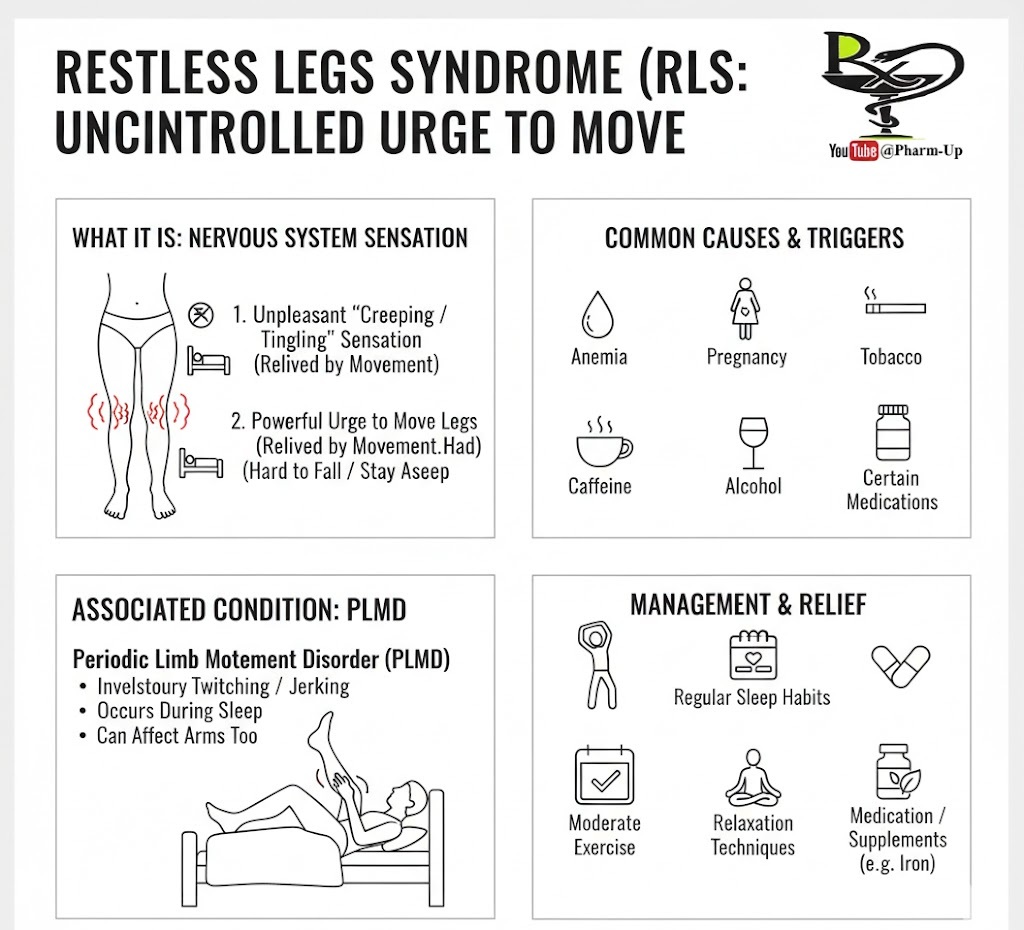
Restless Legs Syndrome (RLS), also known as Willis-Ekbom Disease, is a neurological sensory disorder characterized by an irresistible urge to move the legs. This sensation is typically triggered by rest—such as sitting or lying down—and is temporarily relieved by movement.
Symptoms and Sensations
The primary symptom of RLS is an uncomfortable “creeping” or “crawling” sensation, usually in the lower legs.
- Timing: Symptoms often worsen in the evening or night, making it difficult to fall asleep or stay asleep.
- Sensory Descriptions: Patients often describe the feeling as tingling, burning, aching, or like “electric shocks.”
- Relief: Walking, stretching, or shaking the legs provides immediate but often short-lived relief.
Potential Causes and Triggers
In many cases, the exact cause of RLS is unknown (idiopathic). However, several factors and underlying conditions are known to contribute to its development:
- Iron Deficiency: Low levels of iron in the brain can disrupt dopamine production, a key chemical for muscle control.
- Medical Conditions: Chronic diseases such as kidney failure, diabetes, and peripheral neuropathy.
- Pregnancy: Many women experience RLS during the third trimester, though symptoms usually disappear after delivery.
- Substances: Caffeine, alcohol, and tobacco can significantly worsen symptoms. Certain medications, including some antidepressants and anti-nausea drugs, may also act as triggers.
Periodic Limb Movement Disorder (PLMD)
Most people with RLS also suffer from Periodic Limb Movement Disorder (PLMD). While RLS happens while awake, PLMD occurs during sleep.
- Involuntary Action: It involves repetitive twitching, jerking, or kicking of the legs (and sometimes arms) every 20 to 40 seconds.
- Sleep Quality: These movements can cause “micro-wakings” that leave the individual feeling exhausted the next day, often without them realizing why their sleep was disrupted.
Management and Treatment
Treatment focuses on easing symptoms and improving sleep quality through lifestyle adjustments and, if necessary, medication.
- Sleep Hygiene: Maintaining a strict sleep schedule and a cool, quiet sleeping environment.
- Physical Activity: Moderate daily exercise is helpful, but over-exertion late in the day may worsen symptoms.
- Relaxation Techniques: Leg massages, warm baths, or heating pads/ice packs can soothe the sensations.
- Medical Intervention: If iron levels are low, supplements may be prescribed. For severe cases, doctors may prescribe medications that affect dopamine levels or calcium channels in the brain.
About the Author