Pharm'Up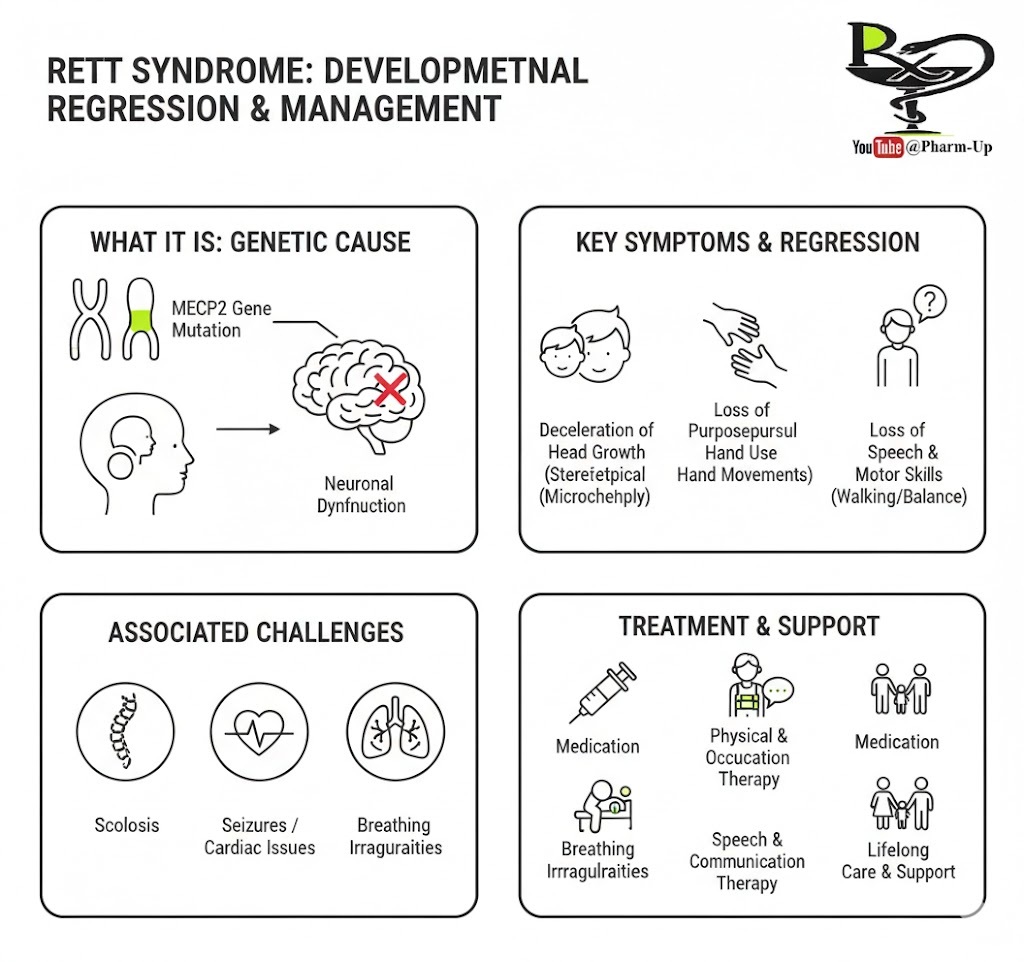
Rett syndrome is a rare, non-inherited genetic neurological disorder that primarily affects girls. It is often characterized as being on the autism spectrum, though it has a distinct pattern of progression. While infants with Rett syndrome often appear to hit their milestones initially, they eventually experience a period of regression where they lose previously acquired skills.
The Stages of Progression
Unlike many other developmental disorders, Rett syndrome typically follows a specific timeline:
- Early Onset: Development slows down or stalls between 6 and 18 months of age.
- Rapid Destruction: Usually between ages 1 and 4, the child begins to lose purposeful hand skills and spoken language.
- Plateau: Regression slows, and some behaviors may even improve, though motor problems remain.
- Late Motor Deterioration: Mobility may decrease further, leading to muscle weakness or scoliosis.
Key Symptoms and Characteristics
The hallmark of Rett syndrome is the loss of functional use of the hands, replaced by repetitive, compulsive movements.
- Motor Skills: Loss of grasping, balance issues, and difficulty walking.
- Communication: Significant loss of speech and social withdrawal.
- Stereotypical Movements: Constant hand-wringing, clapping, or tapping.
- Physical Complications: Breathing irregularities (apnea or hyperventilation), seizures, and slowed head growth (microcephaly).
- Cognitive Impact: Intellectual disabilities and significant learning challenges.
Causes and Genetics
Rett syndrome is almost always caused by a mutation in the MECP2 gene on the X chromosome. Because girls have two X chromosomes, they can survive the mutation, whereas it is often fatal for boys before or shortly after birth.
Treatment and Long-Term Care
While there is currently no cure for Rett syndrome, a multidisciplinary approach can improve quality of life and longevity:
- Therapies: Physical therapy for mobility, occupational therapy for hand function, and speech-language therapy for non-verbal communication.
- Medical Management: Medicines to control seizures, breathing problems, or heart rate irregularities.
- Surgery: May be required for scoliosis (curvature of the spine) or gastrointestinal issues.
- Life-Long Support: Most individuals live into their 40s or 50s and beyond, but they will require specialized care for their entire lives.
About the Author