Pharm'Up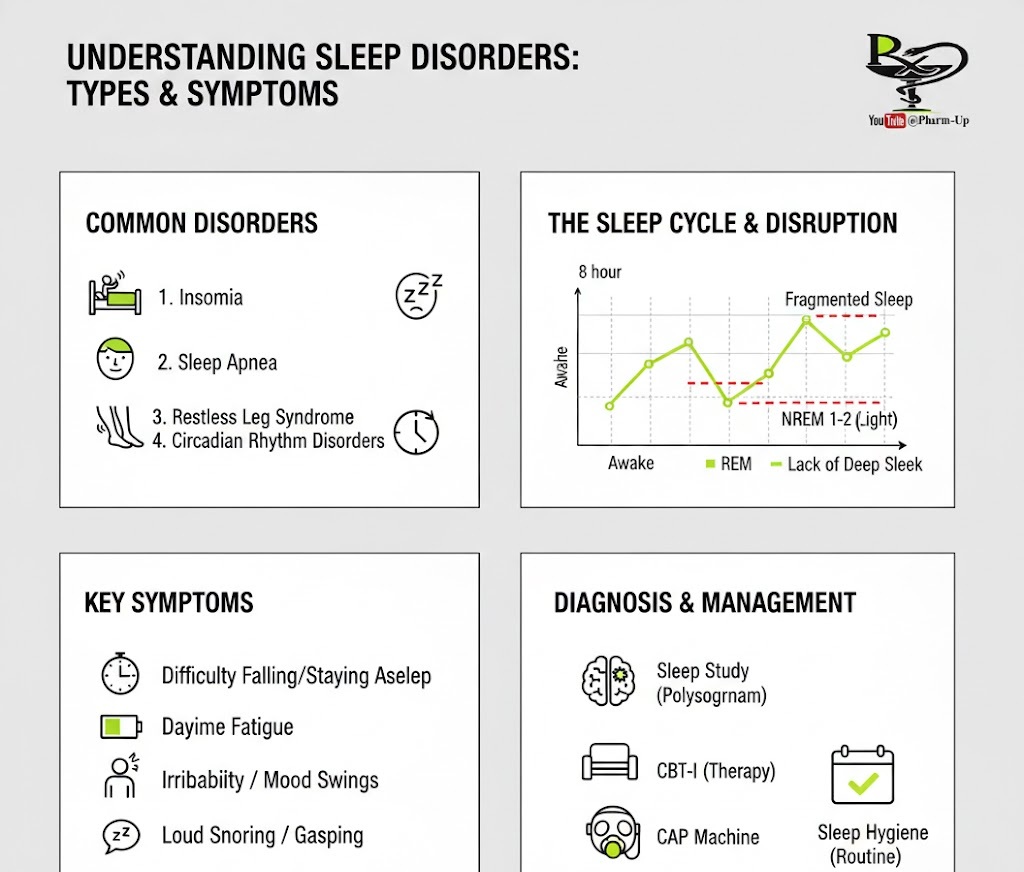
Sleep is a dynamic and essential natural process. While you sleep, your brain and body remain active, restoring energy, supporting memory consolidation, and maintaining your physical health. Getting high-quality sleep is just as important as the number of hours you spend in bed.
The Stages of Sleep
Throughout the night, your brain cycles through two primary types of sleep. Interruptions to these cycles can lead to poor-quality rest.
- Non-REM (NREM) Sleep: Consists of three stages, progressing from light sleep to deep, restorative sleep.
- REM (Rapid Eye Movement) Sleep: The stage where most dreaming occurs. It is crucial for cognitive functions like learning and emotional regulation.
Common Sleep Disorders
Sleep disorders are conditions that disrupt your normal sleep patterns and prevent restorative rest.
| Category | Description |
| Insomnia | Difficulty falling or staying asleep, even when you have the chance to do so. |
| Sleep Apnea | A breathing disorder where breathing repeatedly stops and starts. |
| Restless Leg Syndrome (RLS) | An uncontrollable urge to move the legs, often due to uncomfortable sensations. |
| Hypersomnia | Excessive daytime sleepiness, including conditions like narcolepsy. |
| Circadian Disorders | Problems with the “internal clock,” often caused by shift work or jet lag. |
| Parasomnias | Unusual behaviors during sleep, such as sleepwalking or night terrors. |
Causes and Contributing Factors
Disorders can stem from underlying medical conditions, lifestyle choices, or genetics.
- Health Conditions: Heart or lung disease, chronic pain, and nerve disorders.
- Mental Health: Anxiety and depression are frequent contributors to sleep disruption.
- Lifestyle & Aging: Use of caffeine or alcohol, irregular work shifts, and the natural aging process (which often results in lighter sleep).
Diagnosis and Treatment
If you regularly take more than 30 minutes to fall asleep or feel exhausted during the day, a healthcare provider may suggest a Polysomnogram (Sleep Study).
Common treatments include:
- Lifestyle Changes: Consistent sleep schedules and regular exercise.
- Medical Devices: Using a CPAP machine to keep airways open for those with sleep apnea.
- Therapy: Cognitive Behavioral Therapy (CBT) to reduce anxiety surrounding sleep.
- Light Therapy: Using bright lights to reset the circadian rhythm.
- Supplements/Medication: Short-term use of sleep aids or melatonin.
About the Author