Pharm'Up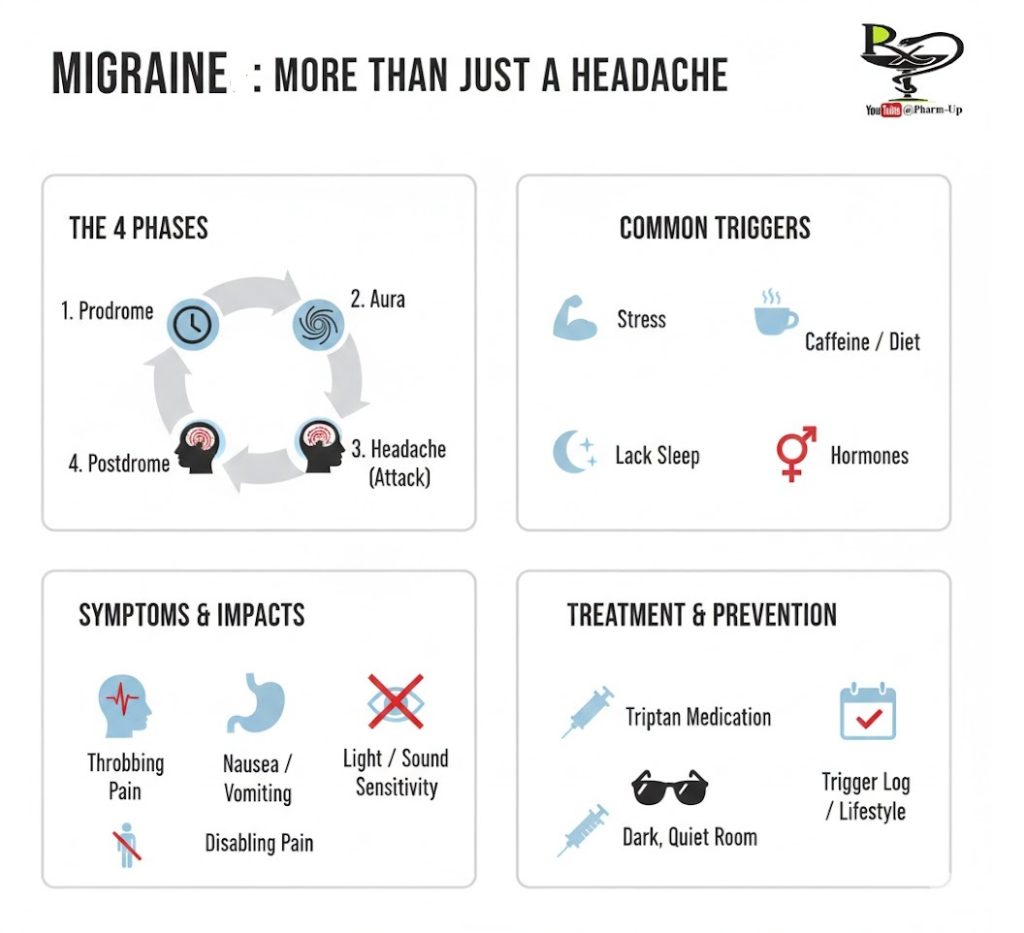
A migraine is a complex neurological condition that causes much more than a simple headache. It typically manifests as a recurring, intense, throbbing pain, often concentrated on one side of the head. Approximately 12% of the population suffers from migraines, with women being three times more likely to experience them than men.
The Four Phases of a Migraine
A migraine attack can last anywhere from a few hours to several days and often progresses through four distinct stages:
- Prodrome: Occurs 24 hours before the pain. Signs include mood swings, food cravings, and neck stiffness.
- Aura: Affects about 25% of sufferers. Includes visual disturbances like flashing lights, zig-zag lines, or temporary vision loss.
- Headache (Attack): The peak of the episode, involving throbbing pain, nausea, and extreme sensitivity to light and sound.
- Postdrome: Often called a “migraine hangover,” leaving the person feeling drained, weak, or confused for up to a day.
Understanding Your Triggers
Migraines are often linked to genetics, but environmental factors usually trigger the individual attacks.
| Category | Common Triggers |
| Lifestyle | Stress, anxiety, poor sleep, or intense physical exertion. |
| Dietary | Alcohol (red wine), aged cheeses, chocolate, MSG, and caffeine. |
| Sensory | Bright lights, sun glare, loud noises, and strong odors (perfume/smoke). |
| Biological | Hormonal shifts in women (menstruation) or skipping meals. |
Diagnosis and Treatment
Because migraine symptoms can mimic other serious conditions, doctors use physical exams and sometimes MRI/CT scans to rule out other issues.
Acute Treatment (During an attack):
- Medications: Triptans, ergotamines, and over-the-counter pain relievers.
- Comfort: Resting in a dark, quiet room with a cool cloth on the forehead.
- Hydration: Drinking plenty of fluids.
Preventative Strategies:
- Trigger Tracking: Keep a “headache diary” to identify and avoid personal triggers.
- Lifestyle Shifts: Maintaining consistent sleep patterns and managing stress through biofeedback or exercise.
- Supplements: Under medical supervision, Magnesium, Riboflavin (B2), and Coenzyme Q10 may reduce frequency.
About the Author