Pharm'Up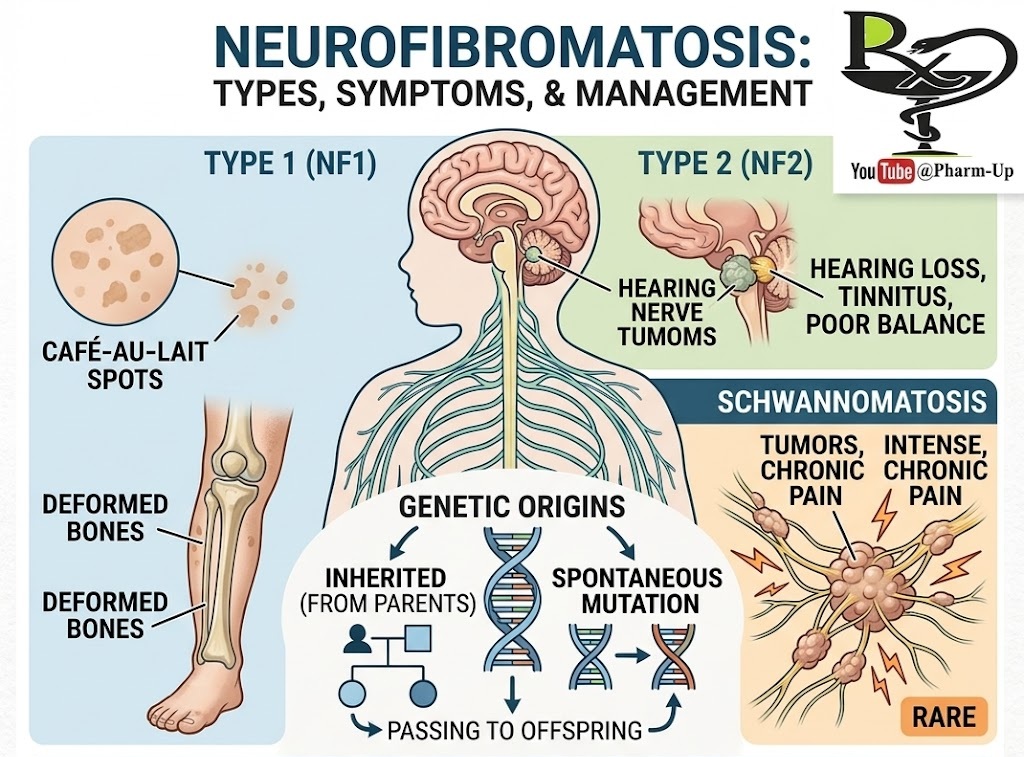
Neurofibromatosis is a complex genetic disorder that primarily targets the nervous system, interfering with how nerve cells form and grow. This interference leads to the development of tumors on nerve tissues. These tumors can appear anywhere in the nervous system, including the brain, spinal cord, and peripheral nerves. While the majority of these tumors are benign (non-cancerous), they can sometimes become malignant or cause significant health issues by pressing on vital structures.
The condition is hereditary, passed down from parents to children, though it can also arise spontaneously due to a sudden mutation in the genes. Because it is a permanent change in the genetic code, individuals with the disorder can pass it on to their offspring.
The Three Primary Types
The disorder is categorized into three distinct types, each defined by its symptoms and the age at which they typically appear:
- Type 1 (NF1): Usually diagnosed in childhood, often appearing at birth. It is characterized by skin pigment changes (cafe-au-lait spots) and bone deformities.
- Type 2 (NF2): Typically surfaces during the teenage years. It primarily affects the ears, leading to hearing loss, persistent ringing (tinnitus), and issues with balance.
- Schwannomatosis: The rarest form of the disorder. It is distinct for causing intense, chronic pain as tumors develop on cranial, spinal, and peripheral nerves.
Diagnosis and Treatment
Doctors utilize a combination of symptomatic observation and genetic testing to confirm NF1 and NF2. While there is currently no known cure, medical intervention focuses on managing the progression and symptoms.
Treatment plans are highly individualized and may include:
- Surgery: To remove tumors that cause pain or interfere with organ function.
- Radiation Therapy: To shrink or control tumor growth.
- Medications: To manage pain or target specific tumor pathways.
About the Author