Pharm'Up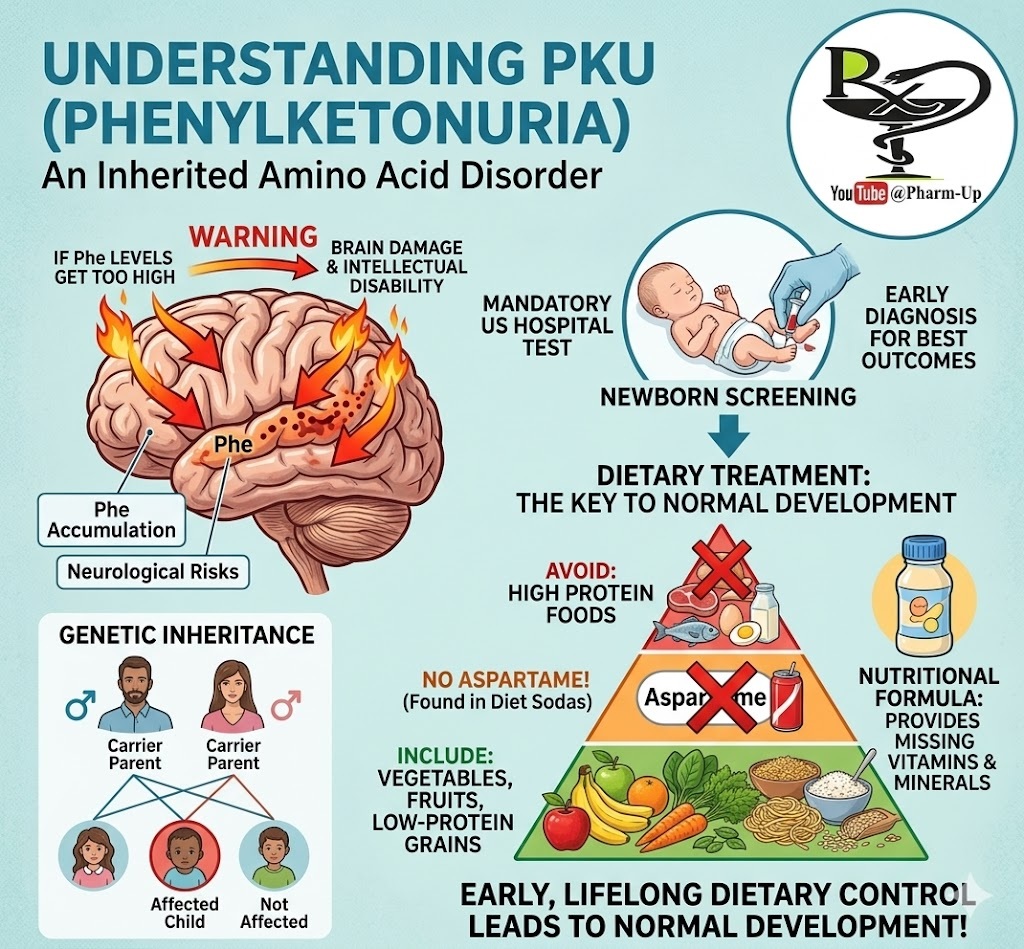
Phenylketonuria (PKU) is a rare genetic condition that prevents the body from properly breaking down an amino acid called phenylalanine (Phe). Amino acids are the essential building blocks of protein, and since Phe is found in nearly all protein-containing foods, managing the condition requires a strict, lifelong nutritional strategy.
If left untreated, Phe levels build up in the blood and can lead to serious health complications, including brain damage and severe intellectual disabilities. However, because of universal newborn screening, most cases are caught immediately, allowing for a healthy and normal life through dietary control.
Understanding the Mechanism
In a healthy body, an enzyme called phenylalanine hydroxylase converts Phe into another amino acid, tyrosine. In individuals with PKU, this enzyme is either missing or not functioning correctly.
- Inheritance: PKU is an autosomal recessive disorder. This means a child must inherit two copies of the mutated gene—one from each parent—to develop the condition.
- Early Detection: In many countries, a simple “heel stick” blood test is performed on newborns within the first few days of life to ensure early diagnosis.
Treatment: The PKU Diet
Since there is no cure for the genetic mutation itself, the primary treatment is a low-phenylalanine diet. This is not just a childhood requirement but a lifelong commitment to protect neurological health.
| Food Category | Status | Examples |
| High Protein | Avoid | Meat, dairy, eggs, nuts, beans, and fish. |
| Artificial Sweeteners | Avoid | Aspartame (found in many diet sodas) contains high levels of Phe. |
| Low Protein | Allowed | Most fruits and many vegetables. |
| Specialty Foods | Allowed | Low-protein breads, pastas, and specialized medical formulas. |
Because the diet is so restrictive, patients must consume specialized medical formulas. These formulas are crucial because they provide the necessary vitamins, minerals, and other amino acids that the body needs to grow and function without the harmful Phe.
About the Author