Pharm'Up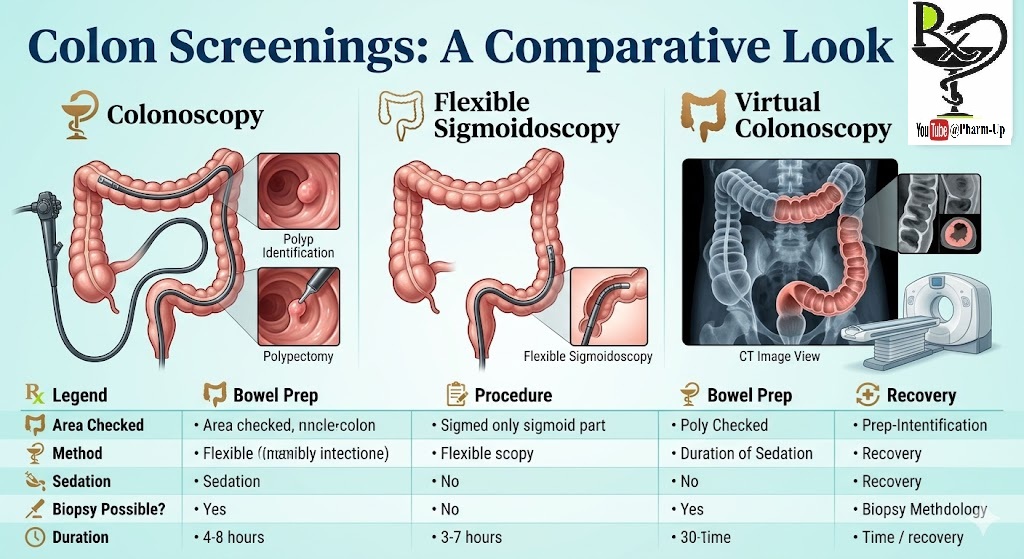
When it comes to digestive health, doctors use specific tools to see what is happening inside the colon (large intestine) and rectum. These procedures are vital for diagnosing unexplained pain or bleeding and for the early detection of colorectal cancer.
Comparing the Procedures
| Feature | Colonoscopy | Flexible Sigmoidoscopy | Virtual Colonoscopy |
| Area Checked | Entire colon and rectum. | Only the rectum and lower (sigmoid) colon. | Rectum and part of the colon. |
| Method | Physical scope with a camera. | Physical scope with a camera. | CT Scan (X-rays). |
| Sedation | Yes (Anesthesia/Sedatives). | Usually no. | No. |
| Biopsy Possible? | Yes, during the procedure. | Yes, during the procedure. | No (requires a follow-up scope). |
| Duration | 30–60 minutes. | ~20 minutes. | 10–15 minutes. |
Who Needs These Tests?
Screening is recommended for individuals aged 45 and older who are at average risk. You might also need these tests if you experience:
- Unexplained abdominal pain or weight loss.
- Rectal bleeding or changes in bowel habits (like chronic diarrhea).
- A personal or family history of polyps or colon cancer.
The Preparation: “Bowel Prep”
To ensure the doctor can see the lining clearly, the colon must be empty of all stool.
- Diet: You will likely follow a clear liquid diet for 24 hours (avoiding red/purple dyes).
- Laxatives: You will take powerful laxatives (pills, powder, or enemas) to trigger diarrhea.
- Virtual Prep: For a virtual colonoscopy, you also drink a “contrast medium” so polyps show up clearly on X-rays.
What Happens During the Procedure?
Colonoscopy
While you are sedated, the doctor inserts a colonoscope through the anus. The scope inflates the intestine with air to provide a clear view. If the doctor finds polyps (small growths), they can remove them immediately using a wire loop through the scope.
Virtual Colonoscopy (CT Colonography)
You lie on a table that slides into a CT scanner. A thin tube is used to pump air into the colon, and the machine takes detailed cross-sectional images to create a 3D model of your intestine.
Flexible Sigmoidoscopy
This is similar to a colonoscopy but much faster and focuses only on the last third of your colon. Because it is less invasive, you are usually awake.
Post-Procedure Recovery
- Gas/Cramping: Feeling bloated or gassy is normal as the air used during the procedure passes out.
- Bleeding: If a polyp was removed, minor rectal spotting is common for a day or two.
- Results: Visual results are immediate, but biopsy results typically take a few days.
About the Author