Pharm'Up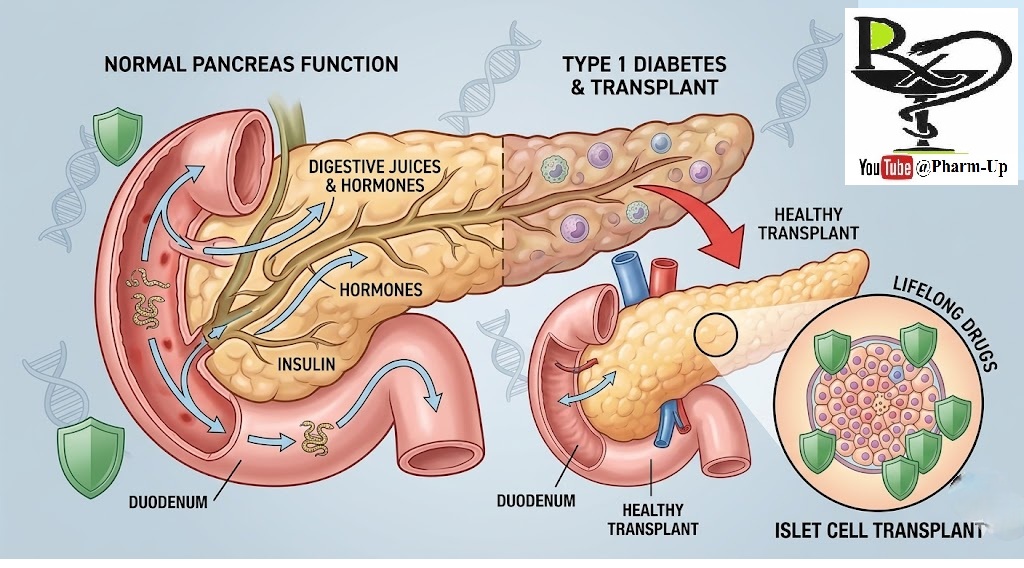
The pancreas is a vital gland located behind the stomach and in front of the spine. It plays a dual role, producing digestive juices to break down food and hormones, such as insulin, that are critical for controlling blood sugar levels. A pancreas transplant is a surgical procedure in which a healthy pancreas from a donor is placed into a person whose own pancreas is diseased or non-functional. This surgery is primarily indicated for individuals suffering from severe type 1 diabetes who experience life-threatening complications.
The Role of Transplants in Diabetes Care
In individuals with type 1 diabetes, the pancreas loses its ability to produce insulin, a hormone essential for life.
- Main Objective: The goal of a pancreas transplant is to restore the body’s natural ability to produce and regulate insulin.
- Insulin Independence: A successful transplant can allow patients to manage their blood glucose levels without the need for daily insulin shots or pumps.
- Islet Cell Transplantation: A promising, though currently experimental, alternative known as islet cell transplantation focuses only on transplanting the islet cells—the specific parts of the pancreas responsible for making insulin.
Life After Transplant: Commitment and Caution
While a pancreas transplant offers significant potential benefits, it is not a routine treatment due to the substantial risks involved and the availability of donor organs.
Post-Transplant Requirements
Once a patient receives a new pancreas, they must commit to rigorous lifelong care:
- Lifelong Medication: Patients must take powerful anti-rejection drugs (immunosuppressants) for the rest of their lives. These medications prevent the body’s immune system from attacking and rejecting the new, foreign organ.
- Follow-up Care: Transplantees require regular, intensive medical follow-ups to monitor the function of the new pancreas and manage any side effects from the anti-rejection medications.
Considerations and Commonality
Because the required surgery and subsequent lifelong medications carry serious potential risks, pancreas transplants are generally reserved for those with end-stage complications, rather than being a standard treatment option for all individuals with type 1 diabetes.
About the Author