Pharm'Up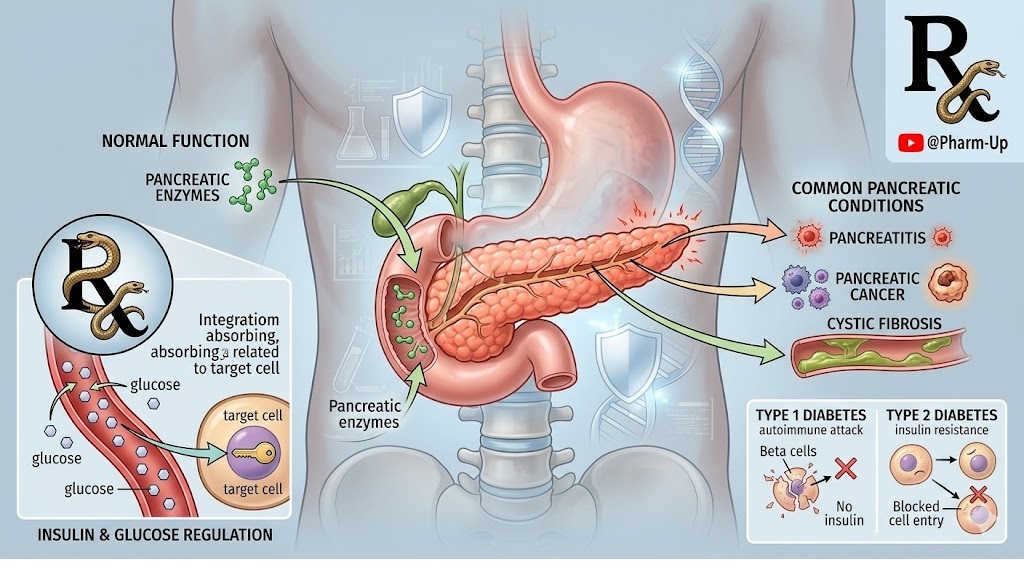
The pancreas is a vital gland situated behind the stomach and in front of the spine. It serves as a dual-purpose organ, functioning both as part of the digestive system and the endocrine system. It produces “juices” containing enzymes that break down food and secretes hormones that are essential for regulating blood sugar levels.
Key Pancreatic Disorders
When the delicate balance of the pancreas is disrupted, it can lead to several significant medical conditions:
- Pancreatitis: This is an inflammation of the pancreas. It occurs when digestive enzymes become active before they are released into the small intestine, essentially causing the organ to digest itself.
- Pancreatic Cancer: A malignant growth starting in the pancreatic tissues. Because of its location, it is often difficult to diagnose in its early stages.
- Cystic Fibrosis: A genetic disorder characterized by the production of thick, sticky mucus. In the pancreas, this mucus can block the ducts, preventing essential digestive enzymes from reaching the intestines.
The Pancreas-Diabetes Connection
The pancreas is the primary organ involved in the management of glucose. Its failure to produce or effectively use insulin leads to diabetes:
- Type 1 Diabetes: An autoimmune condition where the body’s immune system attacks and destroys the beta cells in the pancreas. Consequently, the pancreas produces little to no insulin.
- Type 2 Diabetes: A condition where the body becomes resistant to insulin or the pancreas eventually loses the ability to secrete enough insulin to overcome that resistance, particularly after meals.
About the Author