Pharm'Up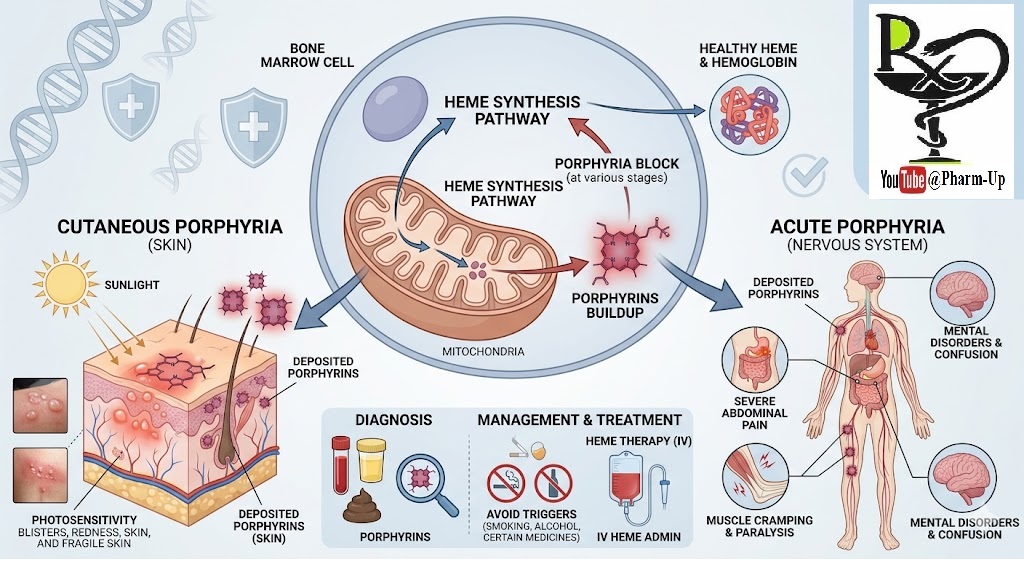
Porphyrias are a group of rare, primarily genetic disorders that arise from a malfunction in the body’s process of creating heme. Heme is a vital component of hemoglobin, the protein in red blood cells that allows them to carry oxygen from the lungs to the rest of the body. It is also found in the bone marrow and the liver.
The Two Main Types of Porphyria
The symptoms of porphyria depend on which stage of the heme-making process is affected and where the resulting chemicals (porphyrins) build up.
1. Cutaneous Porphyrias (Skin)
This type primarily affects the skin. When the skin is exposed to sunlight, accumulated porphyrins cause a chemical reaction that leads to:
- Blisters and fragile skin.
- Intense itching and painful swelling.
- Long-term scarring or changes in skin pigment.
2. Acute Porphyrias (Nervous System)
This type affects the nervous system and can be life-threatening if an attack is severe. Symptoms often appear suddenly and include:
- Severe Pain: Usually in the abdomen, but also in the chest, back, or limbs.
- Neurological Issues: Muscle numbness, tingling, cramping, or even paralysis.
- Digestive Distress: Vomiting and severe constipation.
- Psychological Changes: Anxiety, confusion, personality changes, or other mental disorders.
Understanding Triggers and Attacks
Symptoms of acute porphyria often come in “attacks” that develop over hours or days and can last for weeks. These attacks are frequently set off by specific triggers, such as:
- Certain medications (including sulfonamides and some birth control).
- Alcohol consumption and smoking.
- Physical stress, fasting, or infections.
- Exposure to sunlight (specifically for the cutaneous type).
Diagnosis and Management
Porphyria is famously difficult to diagnose because its symptoms mimic many other common conditions. Doctors must perform specific blood, urine, and stool tests—often timed during an attack—to measure porphyrin levels.
Treatment Strategies
Treatment is tailored to the specific type of porphyria and the severity of the symptoms:
- Avoiding Triggers: The most critical step in preventing future attacks.
- Heme Therapy: Administering heme (panhematin) through a vein to tell the body to stop overproducing porphyrins.
- Phlebotomy: Drawing blood regularly to reduce iron levels in the body (common for Porphyria Cutanea Tarda).
- Symptom Relief: Medications for pain, nausea, and anxiety.
About the Author


 Pharm'Up