Pharm'Up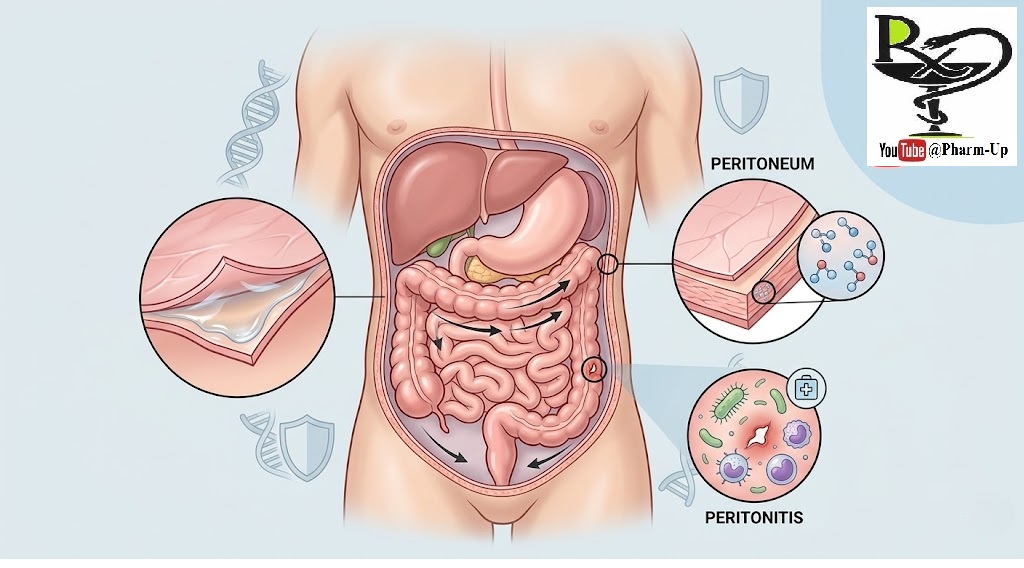
The peritoneum is a thin, silk-like membrane that lines the inner wall of your abdomen and serves as a protective covering for most of the organs located within it, such as the stomach, intestines, and liver.
Function and Peritoneal Fluid
To prevent friction and allow organs to move smoothly against each other during digestion and physical activity, the peritoneum secretes a small amount of peritoneal fluid. This specialized liquid acts as a lubricant, coating the surface of the tissue and ensuring the organs can slide easily within the abdominal cavity.
Common Disorders
While conditions affecting this tissue are relatively rare, they can be serious and often require prompt medical attention:
- Peritonitis: This is an acute inflammation of the peritoneum, usually caused by a bacterial or fungal infection. It is often a medical emergency resulting from a rupture (perforation) in the abdomen, such as a burst appendix.
- Peritoneal Cancer: Malignant cells can develop within the lining itself (primary peritoneal cancer) or spread there from other abdominal organs.
- Dialysis Complications: Patients using peritoneal dialysis to treat kidney failure may experience infections or physical changes to the membrane over time.
Diagnosis and Treatment
If a disorder is suspected, healthcare providers typically use a multi-step diagnostic approach:
- Imaging: CT scans or ultrasounds to visualize inflammation or abnormal growths.
- Fluid Analysis: A procedure to collect and test the peritoneal fluid for signs of infection, blood, or cancer cells.
Treatment is highly specific to the underlying cause, ranging from intravenous antibiotics for infections to surgery or chemotherapy for more complex conditions.
About the Author





 Pharm'Up