Pharm'Up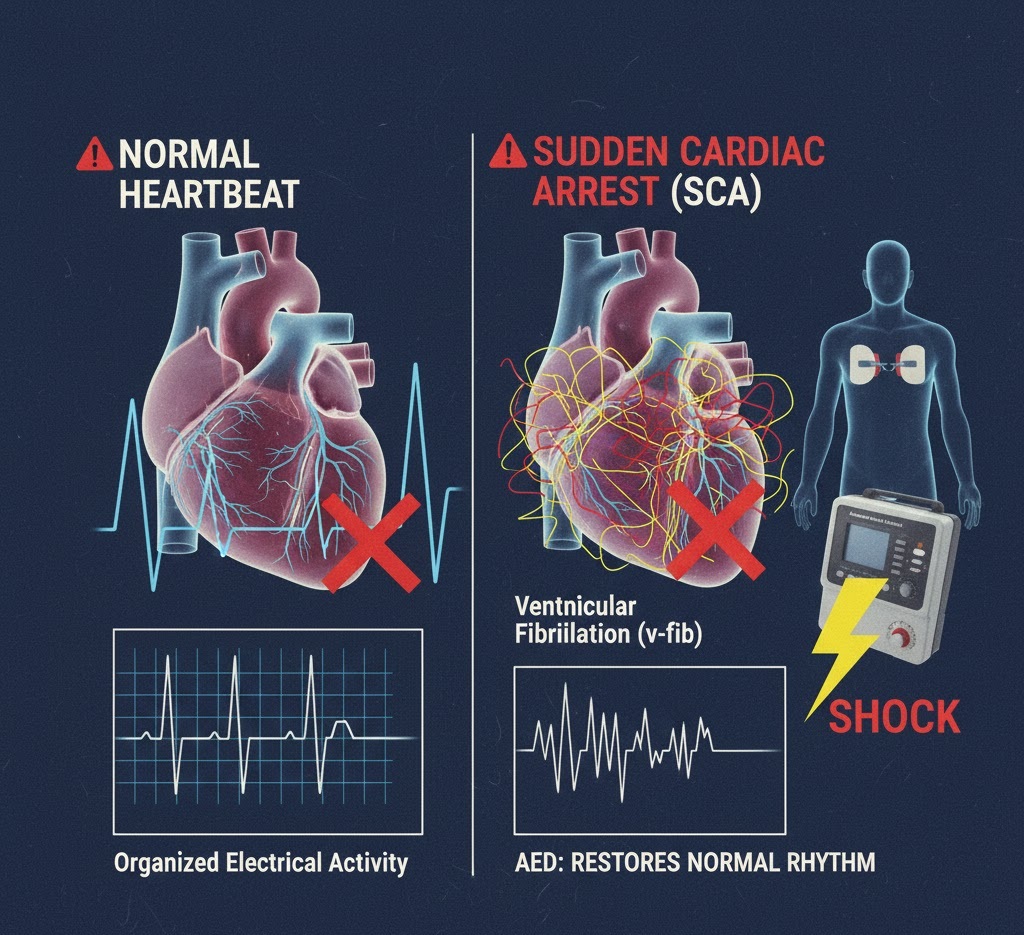
Sudden Cardiac Arrest (SCA) is a life-threatening medical emergency where the heart abruptly stops beating. Unlike a “plumbing” issue where blood is blocked, SCA is an electrical malfunction. When the heart stops, blood flow to the brain and vital organs ceases immediately. Without intervention, death occurs within minutes. However, rapid treatment with a defibrillator can restart the heart and save a life.
SCA vs. Heart Attack: What’s the Difference?
It is common to confuse these two, but they are fundamentally different events:
- Heart Attack (The “Plumbing” Problem): Occurs when blood flow to a part of the heart is blocked. The heart muscle begins to die, but the heart usually keeps beating.
- Sudden Cardiac Arrest (The “Electrical” Problem): Occurs when the heart’s electrical system malfunctions, causing it to stop pumping entirely.Note: A heart attack can sometimes trigger the electrical chaos that leads to SCA.
Causes and Triggers
The heart’s rhythm is managed by internal electrical signals. SCA happens when these signals become erratic (arrhythmia).
Primary Biological Causes
- Ventricular Fibrillation (v-fib): The most common cause. The heart’s lower chambers quiver uselessly instead of pumping blood.
- Coronary Artery Disease (CAD): Plaque buildup in arteries is the leading underlying factor in most SCA cases.
- Structural Changes: An enlarged heart (from high blood pressure) or heart infections.
Environmental and Physical Triggers
- Mineral Imbalance: Critically low levels of potassium or magnesium.
- Extreme Physical Stress: Intense activity can trigger a massive adrenaline release that overwhelms a weakened heart.
- Severe Trauma: Major blood loss or lack of oxygen.
Symptoms and High-Risk Groups
The primary sign of SCA is sudden collapse and loss of consciousness. Some may experience “warning” signs in the hour before, such as a racing heart, dizziness, chest pain, or shortness of breath, but often there is no warning at all.
Who is at highest risk?
- Individuals with existing Coronary Artery Disease or a history of Heart Attacks.
- Men and older adults.
- People with a family history of SCA or inherited heart rhythm disorders.
- Those with heart failure or struggles with substance use.
Life-Saving Action: What to Do
If you suspect someone is in cardiac arrest, seconds matter.
- Call 9-1-1 immediately.
- Start CPR: Chest compressions keep blood moving to the brain.
- Use an AED: Automated External Defibrillators are found in schools, airports, and offices. They are designed for untrained users and will only deliver a shock if the device detects a lethal rhythm.
Survival and Prevention
Survivors of SCA require intensive hospital care to prevent a recurrence.
- ICD (Implantable Cardioverter Defibrillator): A small device placed under the skin that monitors heart rhythm and “shocks” it back to normal if SCA happens again.
- Corrective Surgery: Procedures like angioplasty or bypass surgery to fix the underlying CAD.
- Lifestyle: Adopting a heart-healthy diet and managing blood pressure is the best long-term prevention strategy.
About the Author


 Pharm'Up