Pharm'Up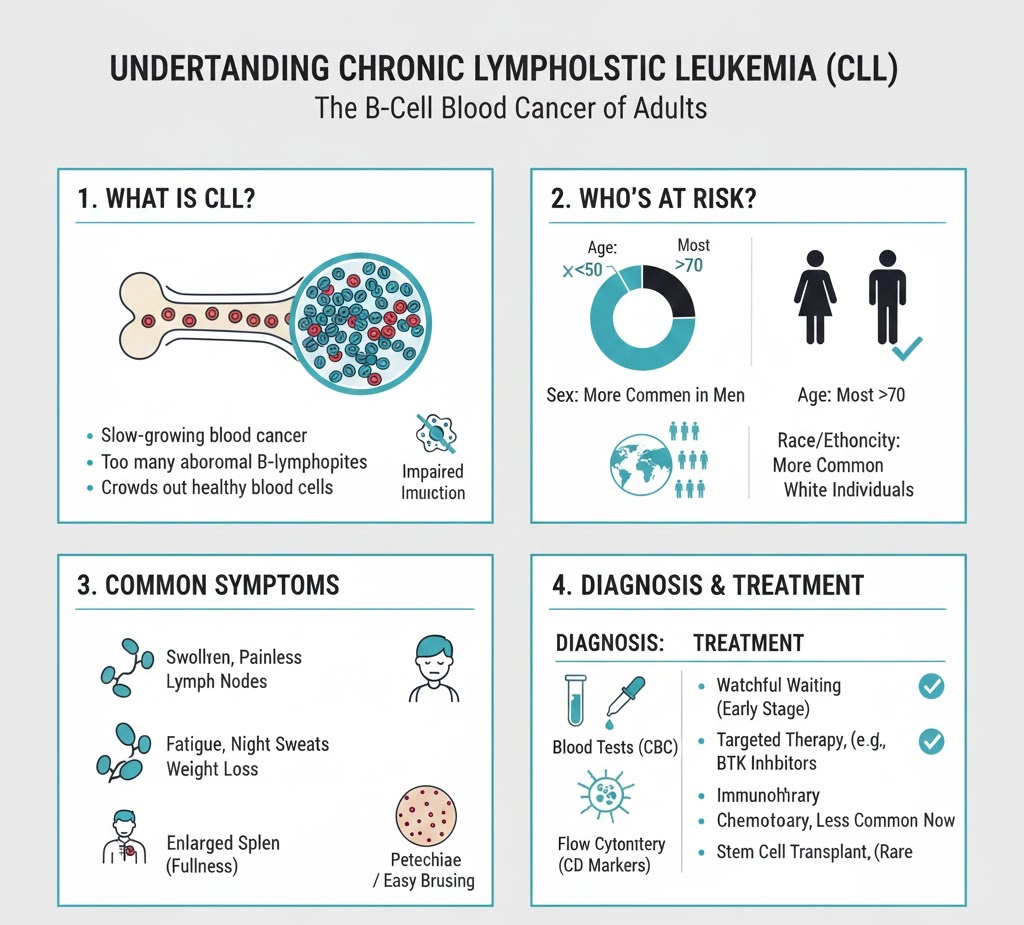
Chronic Lymphocytic Leukemia (CLL) is a slow-growing cancer that begins in the bone marrow. It affects lymphocytes, a type of white blood cell that helps your body fight infection. In a person with CLL, the marrow produces abnormal lymphocytes that don’t function correctly and live longer than they should. Over time, these cells accumulate and “crowd out” healthy blood cells.
1. Who is at Risk? (Demographics and Statistics)
CLL is the most common form of leukemia in adults in Western countries. While the exact cause is unknown, certain groups are statistically more likely to develop the condition.
Racial and Ethnic Groups
In the United States, the incidence of CLL varies significantly by race. According to data from the National Cancer Institute (NCI):
- White populations: Have the highest incidence, at approximately 6.4 to 7.0 cases per 100,000 people per year.
- Black/African American populations: Have a slightly lower incidence, approximately 4.8 to 5.0 cases per 100,000 people.
- Asian/Pacific Islander and Hispanic populations: Have the lowest rates, often below 2.0 cases per 100,000 people.
Age and Sex
- Age: It is primarily a disease of older adults. The median age at diagnosis is 70 years. It is exceptionally rare in children.
- Sex: Men are nearly twice as likely to develop CLL as women.
2. Symptoms and Progression
Because CLL progresses slowly, many people have no symptoms for years. When they do appear, they often include:
- Lymphadenopathy: Painless swelling of the lymph nodes in the neck, armpit, or groin.
- Splenomegaly: A feeling of fullness or pain under the left ribs due to an enlarged spleen.
- B-Symptoms: Fever, drenching night sweats, and unintentional weight loss.
- Skin Signs: Petechiae (tiny red dots under the skin) or easy bruising.
3. Diagnosis and Staging
Diagnostic Tools
- Complete Blood Count (CBC): Shows an elevated number of lymphocytes ($>5,000$ per microliter).
- Flow Cytometry: This is the most important test for CLL. It looks at “markers” on the surface of the cells to confirm they are CLL cells.
- FISH Testing: A genetic test to look for specific chromosomal changes (like deletions in chromosomes 13, 11, or 17) that help predict how the disease will behave.
Staging Systems
Doctors generally use the Rai System (common in the U.S.) or the Binet System (common in Europe) to determine how advanced the disease is based on blood counts and whether the spleen, liver, or lymph nodes are enlarged.
4. Treatment Options
Unlike many other cancers, “Watchful Waiting” (Active Surveillance) is a standard approach for early-stage CLL. Treatment begins only when the disease becomes “active” or causes significant symptoms.
- Targeted Therapy: Modern drugs like BTK inhibitors (e.g., Ibrutinib) target specific proteins that CLL cells need to survive.
- Immunotherapy: Monoclonal antibodies (e.g., Rituximab) that help your immune system find and kill the cancer cells.
- Chemotherapy: Used less frequently today than in the past due to the success of targeted therapies.
- Stem Cell Transplant: Considered for very aggressive cases or when other treatments fail.
About the Author