Pharm'Up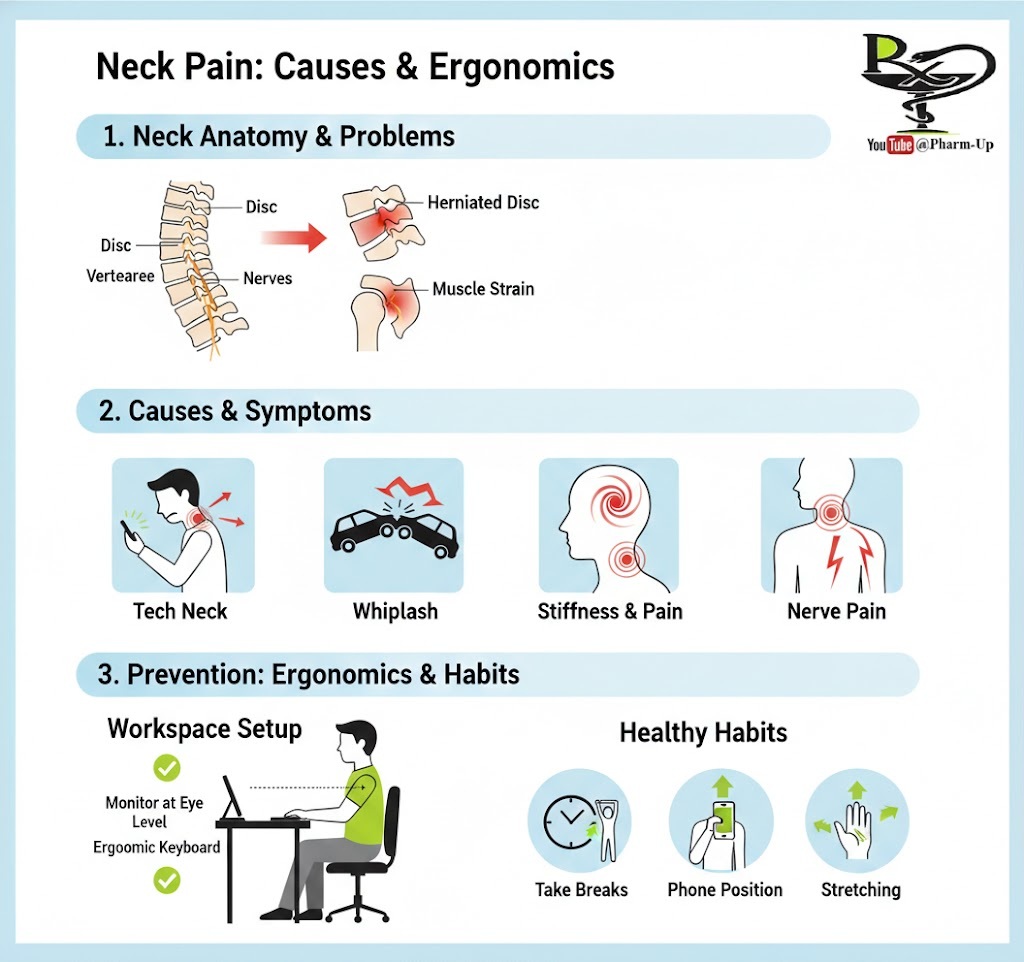
The neck (cervical spine) is a marvel of engineering, tasked with supporting the weight of your head while allowing a significant range of motion. However, because it is so flexible and relatively unprotected, it is highly susceptible to injuries and strain. Any issue involving the cervical vertebrae, intervertebral discs, muscles, or nerves can result in localized pain or symptoms that “radiate” to the head, shoulders, and arms.
1. Common Causes of Neck Pain
Neck pain is frequently mechanical, meaning it stems from the way the parts of the neck move or are positioned.
- Muscle Strain and Tension: This is the most common cause. Often dubbed “Tech Neck,” it results from long hours hunched over computers or smartphones. Poor sleeping positions or sudden movements during exercise can also “pull” these muscles.
- Whiplash and Trauma: Common in car accidents, whiplash occurs when the head is suddenly jerked forward and then backward. This stretches and tears the soft tissues (ligaments and muscles) of the neck.
- Wear and Tear (Cervical Spondylosis): As we age, the cushions (discs) between the neck bones can dry out and shrink, leading to osteoarthritis in the neck joints.
- Nerve Compression: “Pinched nerves” can occur if a disc herniates or if bone spurs form, causing pain that shoots down the arm.
2. Symptoms to Watch For
While simple stiffness is common, certain symptoms indicate a more specific issue:
- Stiff Neck: Difficulty turning the head, often accompanied by soreness.
- Sharp, Shooting Pain: Often a sign of nerve involvement.
- Radiculopathy: Numbness, tingling, or weakness that travels into the shoulder, arm, or hand.
- Cervicogenic Headaches: Pain that starts in the neck but is felt in the back of the head or behind the eyes.
3. Diagnosis and Evaluation
To determine the source of the pain, a healthcare provider may perform:
- Physical Exam: Checking for tenderness, numbness, and muscle weakness.
- Range of Motion Tests: Seeing how far you can move your head in different directions.
- Imaging: X-rays (for bones), MRIs (for discs and nerves), or CT scans (for detailed bone structure).
4. Treatment Pathways
The majority of neck pain resolves within a few weeks with conservative care.
| Treatment Type | Methods |
| Home Care | Alternating ice (for inflammation) and heat (for muscle relaxation), and OTC pain relievers (Ibuprofen or Acetaminophen). |
| Physical Supports | Cervical Collars to limit movement or ergonomic pillows to support the neck during sleep. |
| Therapy | Physical Therapy to strengthen neck muscles and improve posture; massage therapy for muscle tension. |
| Medical Intervention | Steroid injections for severe nerve inflammation. Surgery is a last resort, reserved for structural issues or severe nerve compression. |
5. Prevention: The “Neutral” Neck
- Ergonomic Setup: Position your monitor at eye level so you aren’t looking down.
- The Phone Check: Bring your phone up to eye level instead of bending your neck down to meet it.
- Stretching: Incorporate gentle “neck rolls” and side-to-side stretches throughout the work day.
- Sleep Posture: Use a pillow that keeps your neck aligned with your spine—avoid pillows that are too high or too flat.
About the Author