Pharm'Up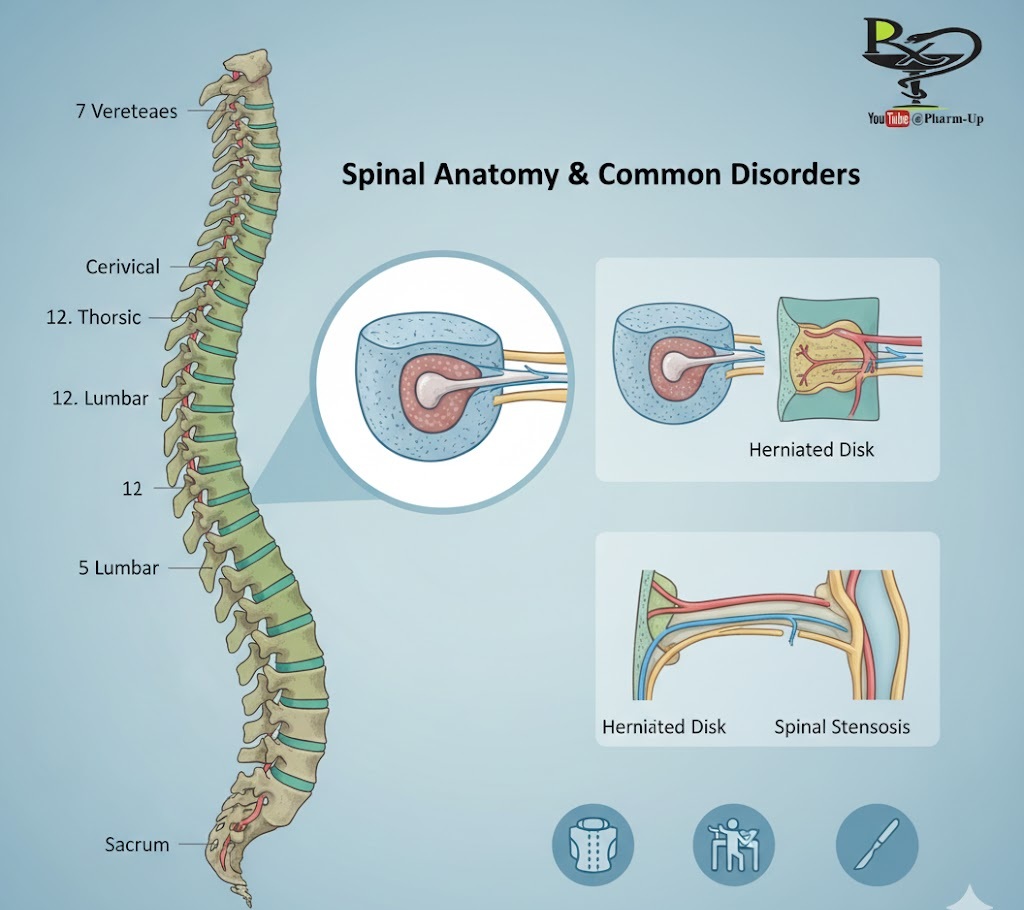
The backbone, or spine, is a complex structure made up of 26 bone discs known as vertebrae. These bones serve the dual purpose of protecting the spinal cord and providing the structural support necessary for a person to stand and bend.
1. Common Spinal Problems
Various issues can alter the structure of the spine or cause damage to the vertebrae and the tissues surrounding them. These include:
- Trauma and Growths: Injuries and tumors.
- Infections: Biological agents that affect spinal integrity.
- Structural Conditions: Diseases such as scoliosis or ankylosing spondylitis.
- Age-Related Changes: Degeneration over time, including spinal stenosis and herniated disks.
2. Symptoms and Impact
Spinal diseases typically manifest through physical limitations and discomfort:
- Pain: Often caused when changes in the bone structure put direct pressure on the spinal cord or nerves.
- Limited Movement: A reduction in the spine’s natural flexibility or range of motion.
3. Treatment Approaches
Because every spinal condition is unique, treatments vary significantly depending on the specific disease. Common medical interventions may include:
- Supportive Devices: Such as back braces to stabilize the structure.
- Surgical Intervention: Procedures designed to repair damage or relieve pressure on nerves.
About the Author