Pharm'Up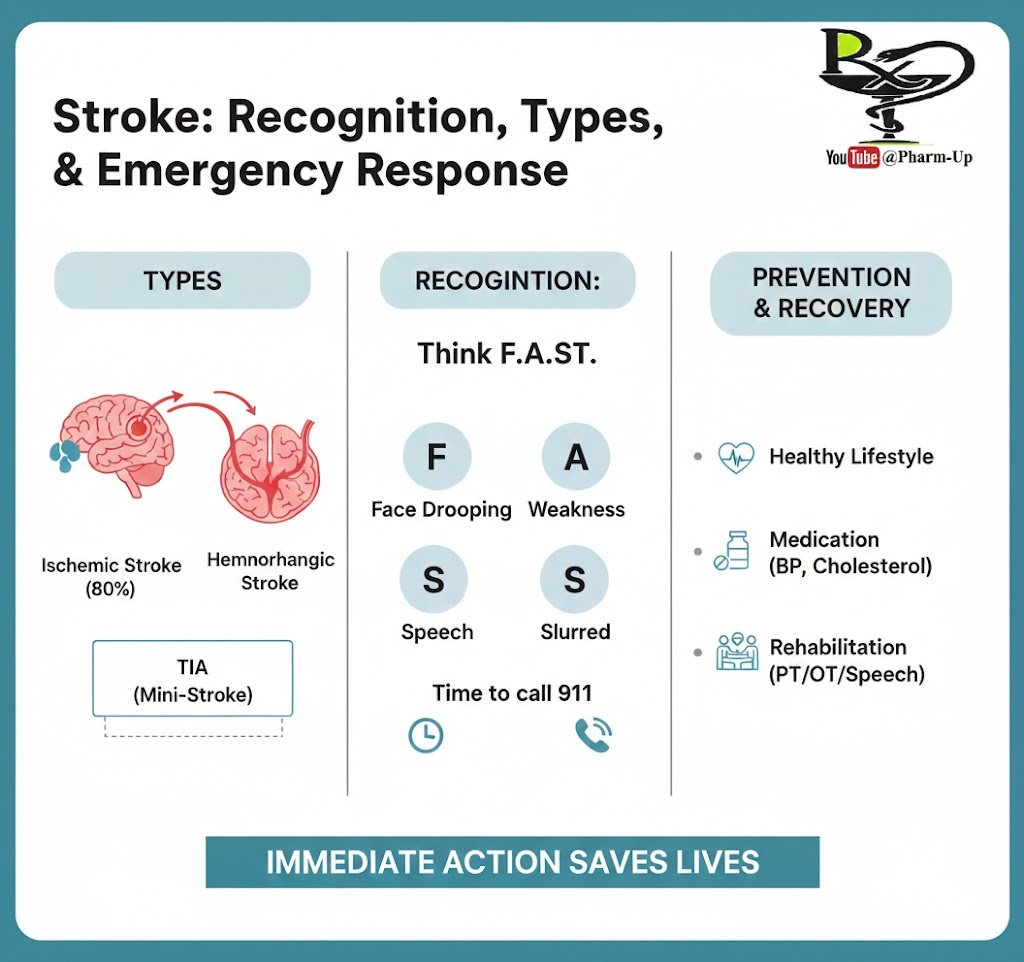
A stroke is a medical emergency that occurs when the blood supply to part of the brain is interrupted or reduced, preventing brain tissue from getting oxygen and nutrients. Brain cells begin to die in minutes. Every second counts; if you suspect a stroke, call 911 immediately.
Types of Stroke
Understanding the mechanism of a stroke determines the course of emergency treatment.
- Ischemic Stroke (80% of cases): Occurs when a blood clot blocks a vessel supplying the brain.
- Hemorrhagic Stroke: Occurs when a weakened blood vessel ruptures and bleeds into the surrounding brain tissue.
- Transient Ischemic Attack (TIA): Often called a “mini-stroke,” this is a temporary blockage. While it doesn’t cause permanent damage, it is a major warning sign of a future full stroke.
Who is at Risk?
Risk factors are a combination of lifestyle, genetics, and existing medical conditions.
- Medical Conditions: High blood pressure (the #1 risk factor), diabetes, high cholesterol, and heart diseases like Atrial Fibrillation.
- Demographics: Risk increases with age. Statistically, certain groups face higher risks: African Americans are nearly twice as likely to have a first stroke as Caucasians and have the highest rate of death due to stroke. Hispanic populations also face significantly higher risks compared to Caucasians, often linked to higher rates of untreated hypertension and diabetes.
- Lifestyle: Smoking, physical inactivity, obesity, and heavy alcohol use.
How to Recognize a Stroke: Think F.A.S.T.
The F.A.S.T. acronym is the most effective way to remember and identify the sudden onset of symptoms.
| Letter | Sign | What to check |
| F | Face | Ask the person to smile. Does one side of the face droop? |
| A | Arms | Ask the person to raise both arms. Does one arm drift downward? |
| S | Speech | Ask the person to repeat a simple phrase. Is their speech slurred? |
| T | Time | If you see any of these signs, call 911 immediately. |
Diagnosis and Treatment
Physicians use CT scans or MRIs to determine the type of stroke, as treatments for clots and bleeds are polar opposites.
- Ischemic Treatment: Doctors use “clot-busting” drugs like tPA (tissue plasminogen activator). This must be administered within a strict 4.5-hour window from the start of symptoms.
- Hemorrhagic Treatment: Focuses on controlling bleeding and reducing brain pressure. This may involve blood pressure medication or surgery to repair aneurysms.
- Rehabilitation: Post-stroke care involves physical, occupational, and speech therapy to help the brain “rewire” and regain lost functions.
About the Author