Pharm'Up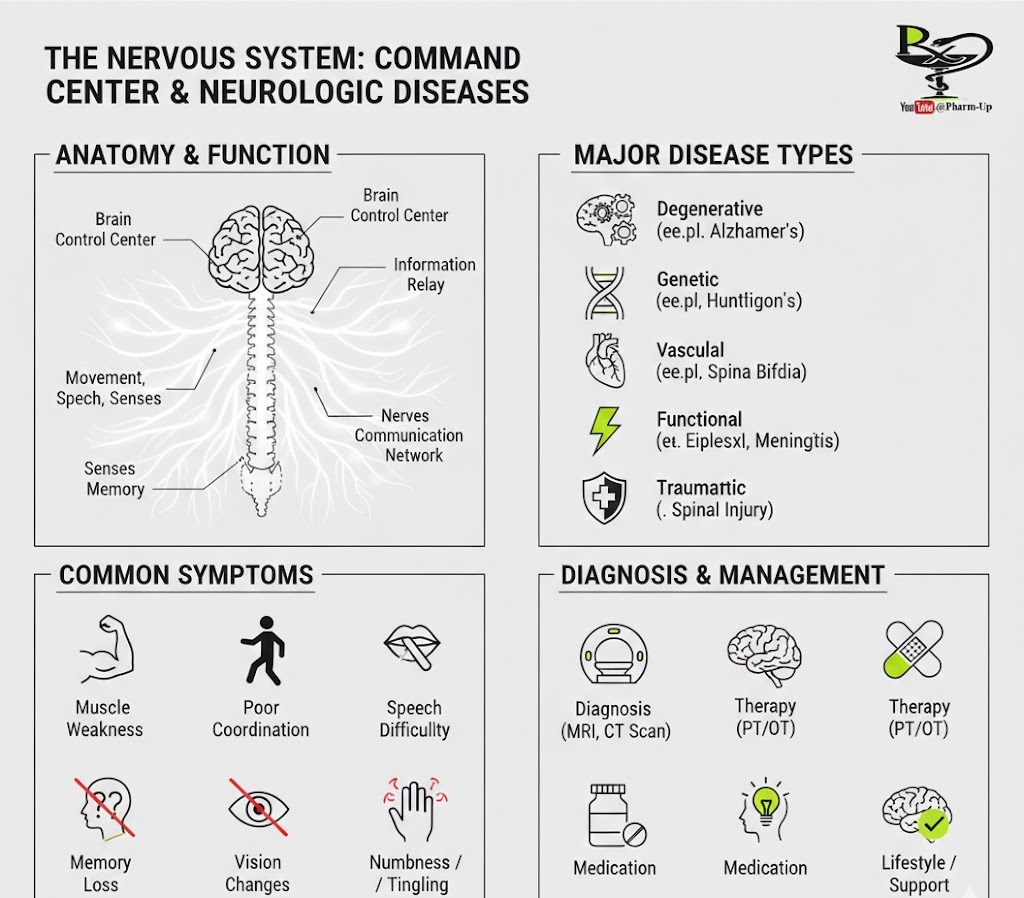
The nervous system is the body’s command center. Comprising the brain, spinal cord, and a vast network of nerves, it coordinates every action—from voluntary movements like walking and speaking to involuntary functions like breathing and digestion. When this system is compromised, it can affect motor skills, cognitive function, and sensory perception.
Anatomy of the Nervous System
The system is divided into two primary parts:
- Central Nervous System (CNS): The brain and spinal cord, which process information and send out instructions.
- Peripheral Nervous System (PNS): The nerves that branch out from the CNS to the rest of the body, acting as communication lines.
Major Types of Neurological Diseases
There are over 600 known neurological disorders. They are generally categorized by their cause or the way they affect the body:
| Category | Description & Examples |
| Degenerative | Nerve cells gradually break down or die. (e.g., Alzheimer’s, Parkinson’s) |
| Genetic | Caused by faulty DNA sequences. (e.g., Huntington’s disease, Muscular Dystrophy) |
| Vascular | Issues with blood flow to the brain. (e.g., Stroke) |
| Developmental | Problems occurring during fetal development. (e.g., Spina Bifida) |
| Functional | Sudden electrical or signal disruptions. (e.g., Epilepsy/Seizures) |
| Infectious | Viruses or bacteria attacking the system. (e.g., Meningitis) |
| Traumatic | Physical damage to the brain or cord. (e.g., Spinal cord injury, TBI) |
Symptoms of Neurological Dysfunction
Because the nervous system controls everything, symptoms of a disorder can vary widely:
- Physical: Muscle weakness, loss of coordination, paralysis, or tremors.
- Cognitive: Memory loss, confusion, or learning disabilities.
- Sensory: Changes in vision, hearing, or unexplained tingling/numbness.
- Vital: Difficulty breathing or swallowing.
About the Author