Pharm'Up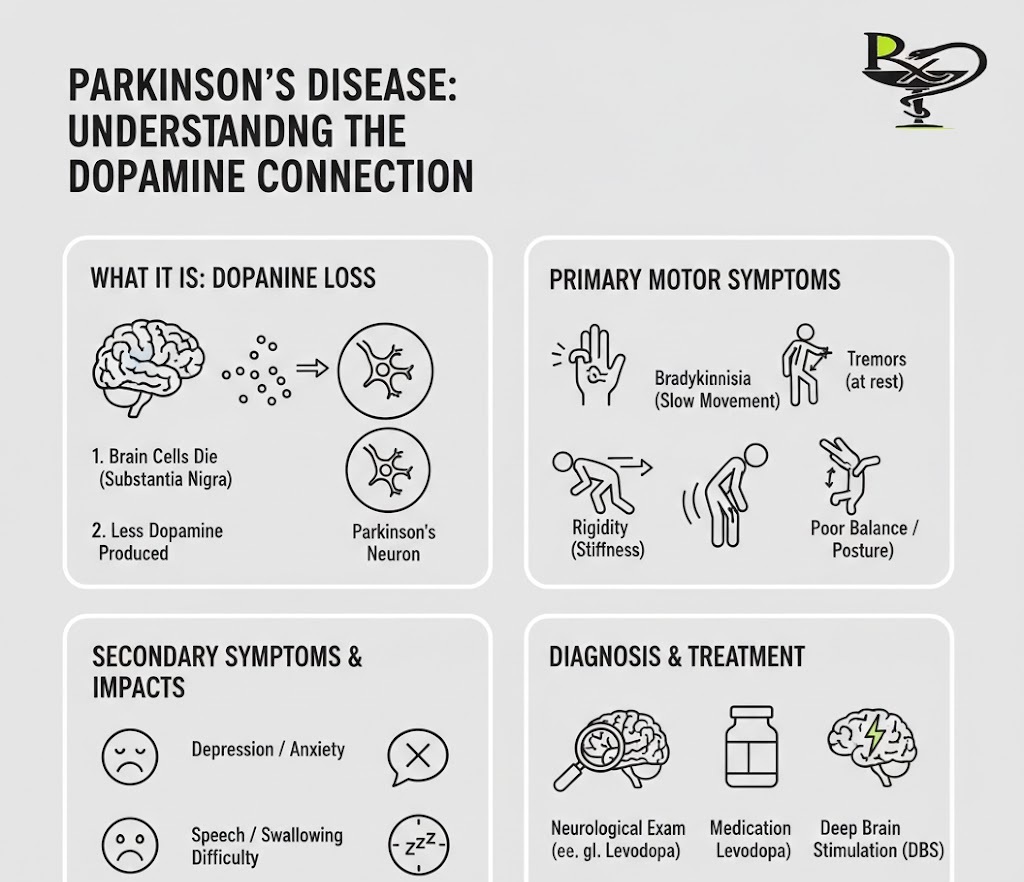
Parkinson’s Disease (PD) is a progressive neurological disorder that primarily affects movement. It occurs when specific nerve cells (neurons) in a part of the brain called the substantia nigra become impaired or die. These neurons normally produce dopamine, a chemical messenger responsible for transmitting signals that allow for smooth, coordinated muscle movement.
Core Symptoms
Symptoms usually develop slowly and may go unnoticed at first. They often begin on one side of the body before eventually affecting both sides.
- Tremors: Involuntary trembling or shaking, often starting in a hand or fingers while at rest.
- Bradykinesia (Slowness of Movement): Over time, PD may slow movement, making simple tasks difficult and time-consuming. Steps may become shorter when walking.
- Rigidity: Muscle stiffness can occur in any part of the body, causing pain and limiting range of motion.
- Postural Instability: Impaired balance and coordination, which increases the risk of falls.
Secondary Complications
As the disease progresses, it can affect systems beyond basic movement:
- Cognitive & Emotional: Depression, anxiety, and in later stages, memory or thinking problems.
- Oral Function: Difficulty chewing, swallowing, or speaking (speech may become soft or slurred).
- Sleep Disturbances: Frequent waking or acting out dreams during sleep.
Diagnosis and Treatment
There is currently no laboratory or blood test to definitively diagnose Parkinson’s. Instead, neurologists diagnose PD based on medical history, a review of signs and symptoms, and a neurological and physical examination.
Treatment Approaches:
- Medications: Most treatments aim to increase or substitute for dopamine. Levadopa is the most common and effective medication.
- Deep Brain Stimulation (DBS): For advanced cases where medication is less effective, surgeons may implant electrodes in specific areas of the brain.
- Lifestyle Support: Physical therapy, occupational therapy, and speech-language pathology can significantly improve daily functioning and quality of life.
About the Author