Pharm'Up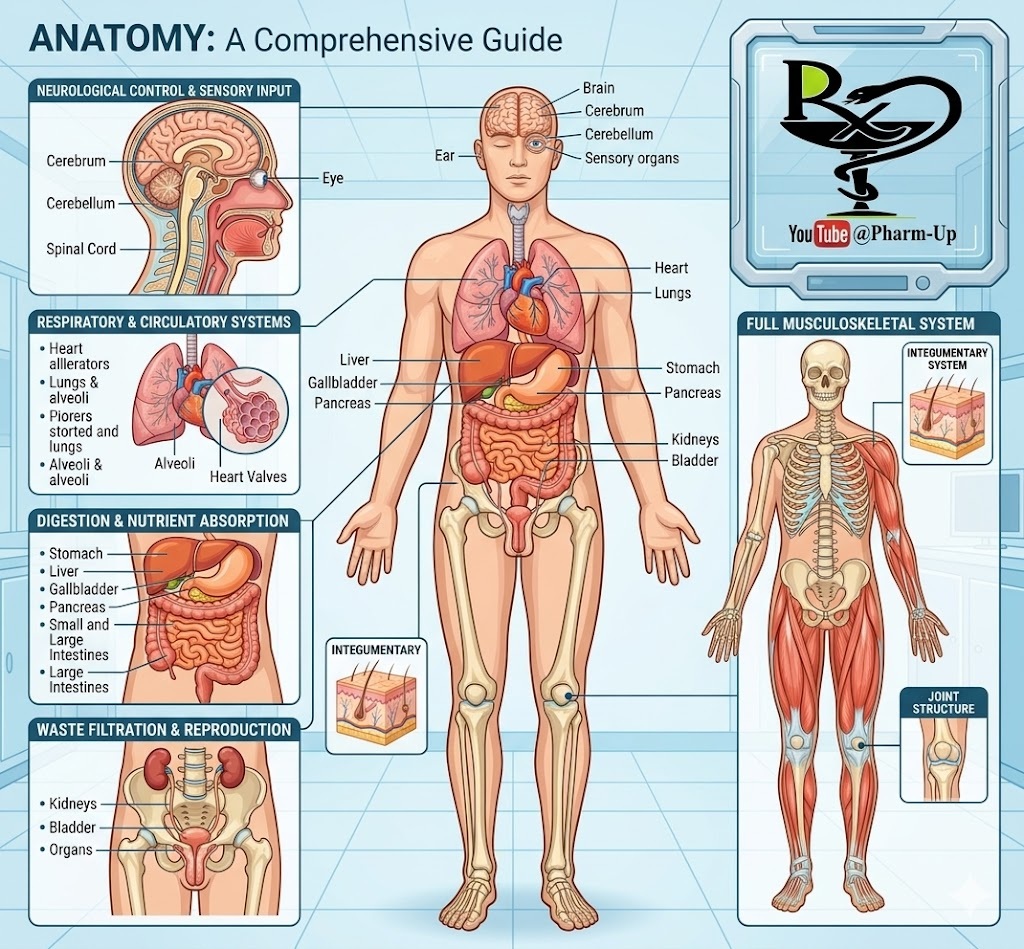
Anatomy is the fundamental branch of biology and medicine focused on the identification and description of the physical structures of living things. By understanding how the human body is organized—from the microscopic level of cells to the complex systems that keep us moving—we gain essential insight into how our health is maintained and how different parts of the body interact.
The Hierarchy of the Human Body
To make the study of anatomy manageable, it is typically broken down into several levels:
- Cells and Tissues: The building blocks that form every organ.
- Organs: Specialized structures like the heart, lungs, and stomach that perform specific functions.
- Organ Systems: Groups of organs working together to meet a major physiological need (e.g., the Circulatory or Nervous system).
Major Body Regions and Systems
| Region | Primary Components | Key Functions |
| Head & Neck | Brain, Skull, Eyes, Ears, Larynx | Sensory processing, communication, and neurological control. |
| Thorax (Chest) | Heart, Lungs, Rib cage, Diaphragm | Respiration and the circulation of oxygenated blood. |
| Abdomen & Pelvis | Stomach, Liver, Intestines, Kidneys, Reproductive organs | Digestion, nutrient absorption, waste filtration, and reproduction. |
| Musculoskeletal | Bones, Muscles, Ligaments, Tendons | Support, protection of vital organs, and movement. |
| Integumentary | Skin, Hair, Nails | Protection against the environment and temperature regulation. |
Why Anatomical Knowledge Matters
Understanding your own anatomy isn’t just for medical professionals; it’s a vital part of personal health literacy. It allows you to:
- Communicate accurately with healthcare providers about where pain or discomfort is located.
- Understand medical diagnoses and how treatments affect specific organ systems.
- Appreciate the complexity of the biological “machinery” that allows you to interact with the world every day.
About the Author