Pharm'Up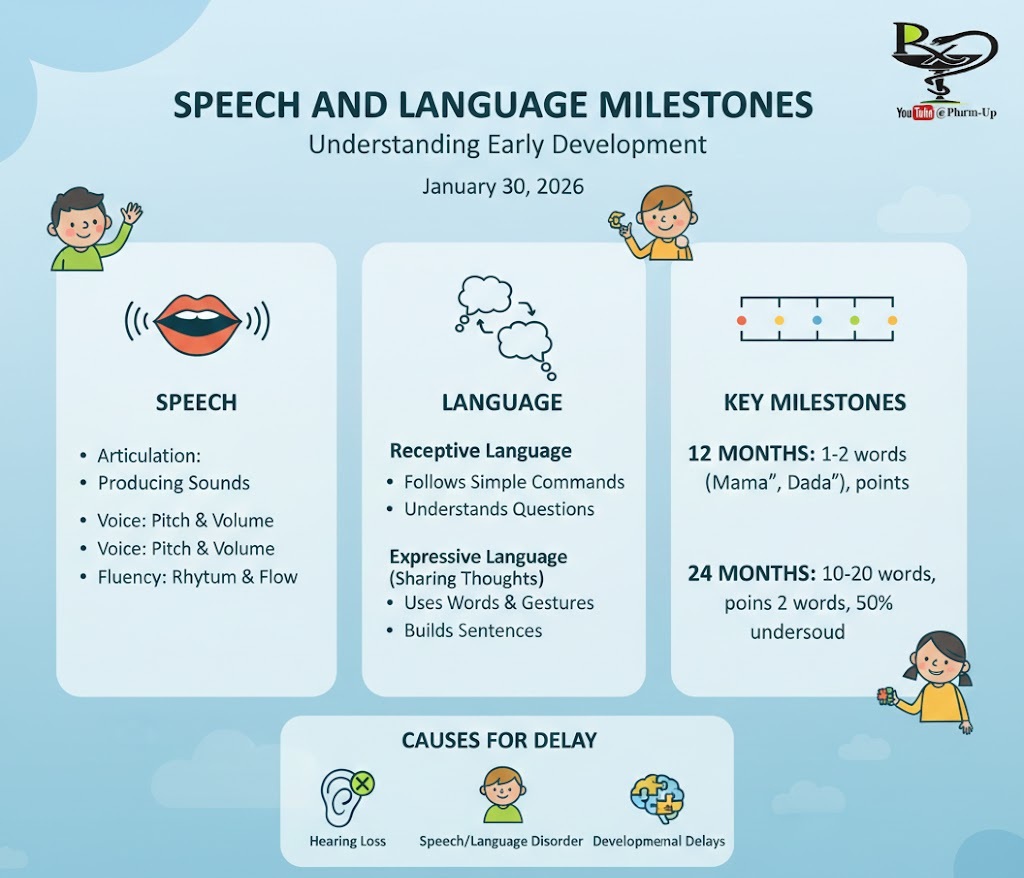
Communication is one of the most complex skills a child learns. While every child develops at their own pace, milestones serve as a “GPS” for parents and healthcare providers to ensure a child’s social and cognitive growth is heading in the right direction.
The Difference Between Speech and Language
It is common to use these terms interchangeably, but in clinical terms, they represent two different functions:
- Speech: The physical act of producing sounds. This involves articulation (how we make sounds), voice (using vocal folds and breath), and fluency (the rhythm of talking).
- Language: The system of symbols we use to share thoughts. This includes receptive language (understanding what others say) and expressive language (the ability to put words together to communicate ideas).
Key Developmental Milestones
Health professionals look for specific behaviors at different ages to track progress:
- By 12 Months: Usually says one or two simple words (like “Mama,” “Dada,” or “Uh-oh”) and can follow simple one-step commands.
- By 18 Months: Has a vocabulary of about 10–20 words and points to objects or body parts when named.
- By 24 Months: Begins joining two words together (like “More juice” or “Dada go”) and is understood by familiar listeners about 50% of the time.
Common Causes of Delays
If a child isn’t hitting these markers, it doesn’t always indicate a permanent disorder, but it does warrant investigation. Potential causes include:
- Hearing Loss: Even temporary hearing loss from chronic ear infections can prevent a child from hearing sounds clearly enough to mimic them.
- Speech Disorders: Issues like apraxia (difficulty coordinating mouth movements) or stuttering (disruptions in the flow of speech).
- Developmental Disorders: Conditions such as Autism Spectrum Disorder (ASD) or general developmental delays can impact the desire or ability to communicate socially.
Taking Action
Early intervention is the “gold standard” for treatment. Because the brain is most adaptable (plastic) in the first three years of life, therapy during this window can have a profound impact.
- Hearing Test: Often the first step to rule out physical barriers.
- Speech-Language Evaluation: A specialist (SLP) observes the child’s play, gestures, and vocalizations.
- Professional Guidance: If you have a “gut feeling” that something is off, consulting a pediatrician is the best first step.
About the Author